The Battle of Siffin was fought in July 657 on the banks of the Euphrates river in northern Syria. On one side stood Ali ibn Abi Talib, the fourth caliph. On the other stood Muawiyah ibn Abi Sufyan, the governor of Syria. The battle lasted several days, ended without a clear winner, and led to an arbitration that failed to settle the dispute. Siffin is one of the most important battles in early Islamic history, because it deepened the first split in the Muslim community and set the stage for the rise of the Umayyad dynasty.
What led to Siffin
The roots of Siffin go back to the murder of the third caliph, Uthman ibn Affan, in 656. Uthman was killed in Medina by rebels who had come from Egypt and Iraq. After his death, Ali was chosen as caliph by the Muslims in Medina. Many people accepted him, but others did not.
Muawiyah, the governor of Syria, refused to give Ali his allegiance. Muawiyah was a relative of Uthman, and he demanded that the killers of Uthman be punished first. Ali replied that the situation in Medina was too unstable to act at once, and that the killers were mixed in with a large and armed crowd. Muawiyah saw this as a delay, and he used Uthman's bloodstained shirt as a public symbol of his demand for justice.
Talha and Zubayr, two senior companions of the Prophet, also raised doubts about Ali's leadership. They left Medina for Basra, where they were joined by Aisha, the widow of the Prophet. In December 656, Ali fought them at the Battle of the Camel near Basra and won. Talha and Zubayr were killed, and Aisha returned to Medina.
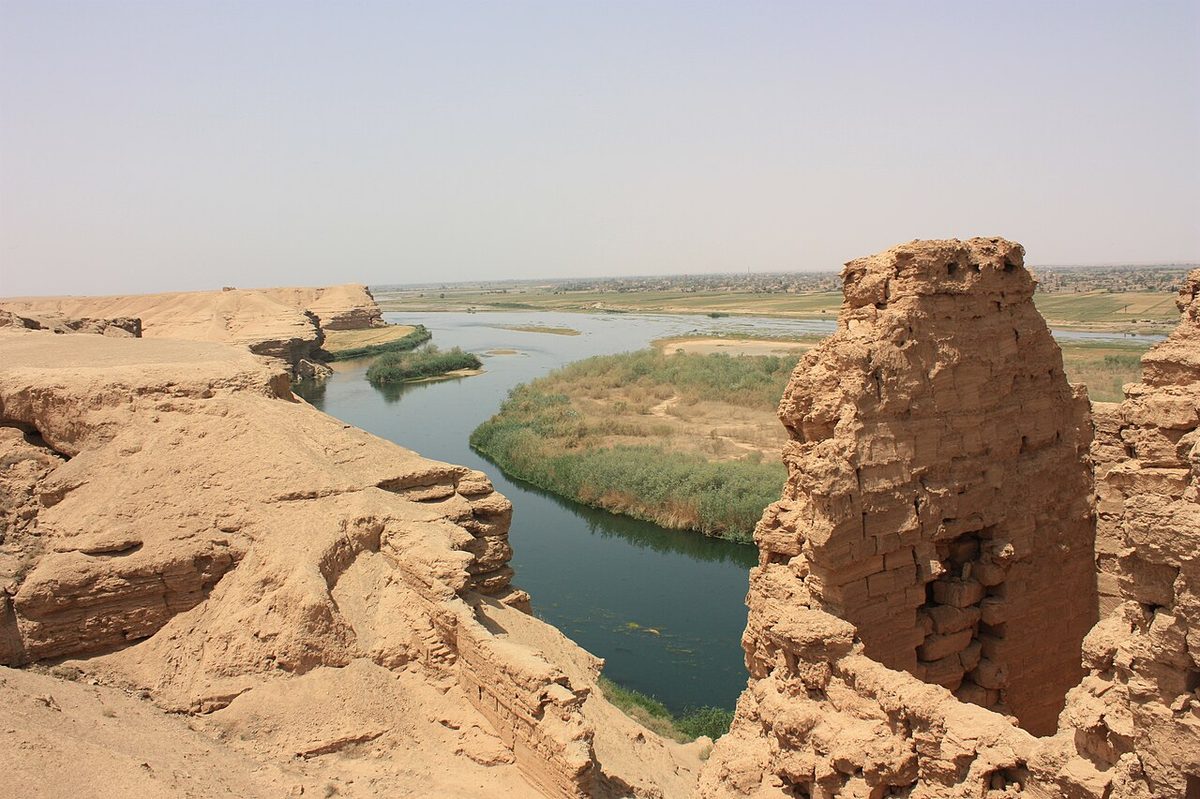
Muawiyah was a harder problem. He ruled Syria, the richest and best organised province of the caliphate, and he had a loyal and well paid army. He also had the support of Amr ibn al-As, a skilled commander who had conquered Egypt. In the spring of 657, Ali marched north from Iraq with an army drawn from Kufa, and Muawiyah moved to meet him. The two armies met at Siffin, a plain on the western bank of the Euphrates, near the modern city of Raqqa.
The armies and the place
Siffin was a large plain beside the river, which gave both armies water and room to move. The two forces were both large. Medieval sources give very different numbers, so no exact figure can be trusted, but historians agree that each side brought tens of thousands of men. Ali's army was made up of fighters from Iraq, including many who had fought at the Battle of the Camel. Muawiyah's army was mostly Syrian, disciplined, and used to fighting on the Byzantine frontier.
Fighting did not begin at once. For weeks the two armies camped opposite each other while messengers went back and forth. Ali wanted Muawiyah to accept his caliphate. Muawiyah wanted Uthman's killers punished first. Neither side would move. Skirmishes broke out, and the Euphrates became a point of dispute when Muawiyah's men at first blocked Ali's army from the water, before Ali's forces pushed them back and then allowed both sides to drink.
How the battle unfolded
The main fighting began in late July 657 and lasted for several days. The two armies fought in the open plain, with cavalry charges and hand to hand combat. On the first days neither side gained a clear edge. Then Ali's forces began to push the Syrians back. His general Malik al-Ashtar led a strong attack that broke through the Syrian lines and brought Muawiyah's camp close to collapse.
At that point, according to the accounts that have come down to us, Amr ibn al-As advised Muawiyah to raise copies of the Quran on spears and call for judgement by the Book of God. The Syrian soldiers lifted the pages high and shouted for the fighting to stop so that the Quran could decide the dispute. Many of Ali's men, tired of fighting fellow Muslims, demanded that he accept. Ali believed it was a trick to escape defeat, and he urged his men to keep fighting, but a large part of his army refused. He had no choice but to agree to stop the battle and submit the dispute to arbitration.
The arbitration
Both sides agreed to appoint one arbitrator each. Ali's men chose Abu Musa al-Ashari, a respected early companion. Muawiyah chose Amr ibn al-As. The two arbitrators were to meet and decide the matter according to the Quran and the practice of the Prophet. They met first at Dumat al-Jandal, and then again at Adhruh, in early 658.
The arbitration did not settle anything. The two arbitrators could not agree, and each side later told the story in its own favour. Some accounts say Abu Musa proposed that both Ali and Muawiyah step down, and that Amr then declared Muawiyah caliph. Other accounts give different versions. What is certain is that the arbitration ended in failure, and that both men went home still claiming to be right.
The arbitration had a second and lasting effect. A group of Ali's own soldiers felt that he had been wrong to accept human arbitration in a matter they believed belonged to God alone. They broke away from his camp and became known as the Kharijites, from the Arabic word for those who go out. They would become a separate movement, and one of them would later assassinate Ali.
What happened next
After Siffin, the caliphate was split in practice. Ali ruled Iraq, Persia, and Arabia from Kufa. Muawiyah ruled Syria and Egypt from Damascus. Ali tried to rebuild his army and deal with the Kharijites, whom he defeated at the Battle of Nahrawan in 658. But his position kept weakening. In January 661, Ali was struck down by a Kharijite assassin as he walked to prayer in the mosque of Kufa. He died two days later.
Ali's eldest son, Hasan, was chosen as caliph in Kufa, but he lacked the strength to fight Muawiyah. Within months, Hasan made peace and stepped down. Muawiyah became the sole ruler of the Muslim world and founded the Umayyad dynasty, which would rule from Damascus for nearly a century. The year of the settlement, 661, became known as the Year of Unity.
Why Siffin still matters
Siffin matters for three reasons. First, it was the moment when the dispute after Uthman's murder turned into a long and open war between two Muslim armies. Second, it produced the Kharijite movement, the first organised split inside Islam, and the idea that a ruler could be judged and removed by his people. Third, it ended the rule of the Rashidun caliphs in practice and opened the way for hereditary rule under the Umayyads.
The battle is also remembered for the image of the Quran raised on spears, which became a famous symbol in Islamic history. For later writers, Siffin was a warning about how a dispute over justice could turn into a war that no one could win.
Frequently asked questions
Who fought at the Battle of Siffin?
Ali ibn Abi Talib, the fourth caliph, fought Muawiyah ibn Abi Sufyan, the governor of Syria. Ali's army came mainly from Iraq, and Muawiyah's army came mainly from Syria.
When and where was the Battle of Siffin fought?
It was fought in July 657 at Siffin, a plain on the western bank of the Euphrates river in northern Syria, near the modern city of Raqqa.
Why did the Battle of Siffin happen?
Muawiyah refused to accept Ali as caliph until the killers of the third caliph, Uthman, were punished. Ali said he could not act until order was restored. Talks failed, and both sides marched to war.
Why did the fighting stop at Siffin?
When Ali's forces were close to victory, Muawiyah's men raised copies of the Quran on their spears and called for the dispute to be settled by the Book of God. Many of Ali's soldiers demanded that he accept, so the battle ended and the matter went to arbitration.
What happened after the Battle of Siffin?
The arbitration failed to settle the dispute. A group of Ali's soldiers, the Kharijites, broke away from him. Ali was assassinated in 661, and Muawiyah became the sole ruler and founded the Umayyad dynasty.