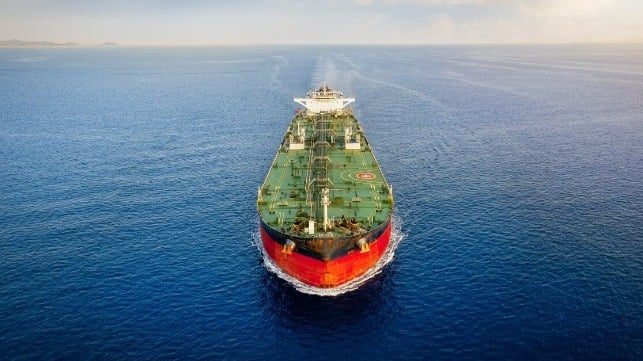
Three oil tankers caught fire in and near the Strait of Hormuz on Sunday, November 8, 2026, in the latest round of attacks on shipping in the waterway at the centre of the war between the United States, Israel, and Iran. Iran said the tankers hit naval mines while using a route it had not authorised. The United States said its forces had disabled a commercial vessel in the Gulf of Oman that it said was trying to break its naval blockade of Iran. At the same time, US President Donald Trump said new American strikes on Iran were highly unlikely as long as talks to end the war kept making progress. The claims from both sides could not be independently confirmed.
What happened on November 8
Iran's Revolutionary Guards Navy said on Sunday that two oil tankers had caught fire after striking naval mines in the Strait of Hormuz. According to Iran's state news agency IRNA, the Guards said the two tankers were using what it called an unauthorised route and had switched off their navigation and positioning systems. Later the same day, the semi-official Fars news agency reported that a third tanker had also suffered an explosion and caught fire.
The Guards did not name the tankers or say which countries they belonged to, and they gave no casualty figures. Reuters reported that it was not able to independently confirm the reported strikes. The Dawn newspaper, reporting the events on November 9, noted that the incidents raised fears of renewed military escalation.
Separately, the US military said on Saturday evening, November 7, that one of its aircraft had fired at the stern of a commercial vessel in the Gulf of Oman, disabling it. The US Central Command said the vessel had ignored repeated warnings and was trying to breach the American naval blockade of Iran.
The United Arab Emirates National Guard said its forces rescued 22 crew members from a burning vessel in the Gulf of Oman, and no deaths were reported in that incident.
On Saturday evening, explosions were also heard in several parts of southern Iran, including Qeshm Island, Sirik, Jask, and Bandar Abbas. Iranian state television said officials had not confirmed any missile strikes on Iranian territory and suggested the blasts might be related to Iranian military activity.
What the two sides are saying
The accounts from Washington and Tehran point in opposite directions. Iran said its navy was enforcing rules it had set for passage through the strait. The United States said its forces were enforcing a blockade on Iranian trade, and that the vessel it disabled in the Gulf of Oman had refused to turn back.
The US military has said the strait remains open to commercial shipping despite the blockade and the attacks. A US Central Command spokesperson, Captain Tim Hawkins, told Al Jazeera that traffic through the strait continues to flow and that American forces have helped move more than 900 million barrels of crude oil through the waterway since early May.
Iran has said it controls the strait and has warned that it could strike American bases across the Middle East if Washington helps tankers pass through parts of the waterway it claims.
Meanwhile, President Trump said on Sunday that fresh American strikes on Iran were highly unlikely, provided that the talks to end the conflict kept advancing. Iran said it had received an American response to its latest peace proposal after Trump had called the original proposal unacceptable. Diplomatic efforts are continuing through Qatari mediation.
Why the strait matters
The Strait of Hormuz is a narrow channel, about 33 kilometres wide at its narrowest point, between Iran to the north and Oman and the United Arab Emirates to the south. It connects the Persian Gulf to the Gulf of Oman and the open sea. Almost all of the oil exported by Saudi Arabia, Iraq, Kuwait, the United Arab Emirates, and Qatar passes through it, along with a large share of the world's liquefied natural gas.
Control of the strait has been a source of tension for decades. Iran has long said it could close the waterway if it were attacked, and the United States has long said it would keep the strait open by force if necessary. Since the war began, Iran has restricted traffic through the strait to routes it authorises, and the United States has answered with a naval blockade aimed at cutting off Iranian trade.
About 2,000 ships are stranded on either side of the strait, according to Al Jazeera, unable to pass through while the two sides dispute who controls the waterway. On November 5, President Trump announced a naval mission called Project Freedom to escort stranded ships through the strait. Iran replied that any foreign armed force trying to enter the strait would be attacked.
How the war reached this point
The war began on February 28, 2026. Early in the war, Iran took control of the strait, and shipping fell sharply. Since then, the fighting has moved through several phases, including ceasefires, renewed strikes, and several rounds of talks.
In the past week, the pattern has been a series of strikes on shipping on both sides. On Wednesday, November 4, Iran said four oil tankers were destroyed after striking naval mines on a route it described as prohibited. On Thursday, November 5, Iran said two oil tankers and a tugboat had caught fire after trying to use unauthorised routes. None of these claims has been independently verified.
The economic cost is also growing. Iraq's foreign minister said the war had cost his country 60 billion dollars in lost oil exports, and Iraq has warned of a wider regional war if the fighting spreads.
What happens next
The immediate question is whether the talks can hold. President Trump's statement that new strikes are highly unlikely if the talks progress is the clearest sign yet that Washington wants a negotiated end to the war. Iran's statement that it has received an American response to its peace proposal suggests the two sides are still talking, even while their forces are striking ships in the Gulf.
The other question is the safety of shipping. As long as both sides keep striking vessels in and around the strait, ship owners, insurers, and crews will face a choice between using a waterway that carries a fifth of the world's oil and waiting on either side of it.
For now, the facts that can be stated with confidence are limited. Tankers caught fire on November 8. Iran said they hit mines on an unauthorised route. The United States said it disabled a vessel trying to break its blockade. The UAE rescued 22 crew members. The president of the United States said new strikes were unlikely if talks kept moving.
Frequently asked questions
What happened in the Strait of Hormuz on November 8, 2026?
Iran's Revolutionary Guards said two oil tankers caught fire after hitting naval mines while using an unauthorised route through the strait. The Fars news agency later reported a third tanker had also caught fire. Reuters said it could not independently confirm the reports.
What did the US military do in the Gulf of Oman?
The US Central Command said its aircraft fired at the stern of a commercial vessel on Saturday evening, November 7, disabling it after the vessel allegedly ignored warnings and tried to breach the American naval blockade of Iran.
Is the Strait of Hormuz still open to shipping?
The US military says the strait remains open and traffic continues to flow. Iran says it controls passage and requires ships to use routes it authorises. About 2,000 ships are reported stranded on either side.
Why is the Strait of Hormuz so important?
About one fifth of the world's oil and liquefied natural gas normally passes through the strait. Disruption there affects global energy prices and the economies of the Gulf states.
Are the US and Iran still talking?
Yes. Iran said it received an American response to its latest peace proposal, and diplomatic efforts are continuing through Qatari mediation. President Trump said on November 8 that fresh strikes were highly unlikely as long as the talks kept progressing.