The United States military has widened its campaign against Iran from the sea to the land. On Saturday, November 7, 2026, US Central Command announced a new task force to block Iran's land-based supply routes. The move comes on the same weekend that two oil tankers reportedly hit mines near the Strait of Hormuz, US forces disabled a cargo ship in the Gulf of Oman, and explosions were reported on Iran's Qeshm Island.
What is Task Force Iron Gate?
Task Force Iron Gate is a new US military task force, announced by US Central Command (CENTCOM) on Saturday, November 7. According to CENTCOM, its job is to prevent Iran from using ground routes to transport advanced weapons and other materials. It will be based in Tampa, Florida, and will coordinate with other US government agencies.
The task force expands a naval blockade of Iran that has already lasted for months. Reuters reported the announcement ahead of its release, and said the task force will also focus on dual-use technologies, sanctioned materials, and illegal revenue streams moving across Iran's land borders and through the Caspian Sea. Dual-use technologies are goods that can be used for both civilian and military purposes.
CENTCOM's commander, Admiral Brad Cooper, said in a statement that strengthening CENTCOM's work with other US agencies "will further constrain Iran's ability to finance terrorism, rebuild weapons factories, and replenish their military." CENTCOM estimated that its naval blockade has already prevented Iran from exporting more than 25 billion dollars worth of crude oil.
The message is clear. The United States is trying to close the gaps in its blockade. If Iran cannot move oil by sea, the new task force aims to stop it moving weapons, parts, and money by land instead.
A violent weekend at sea
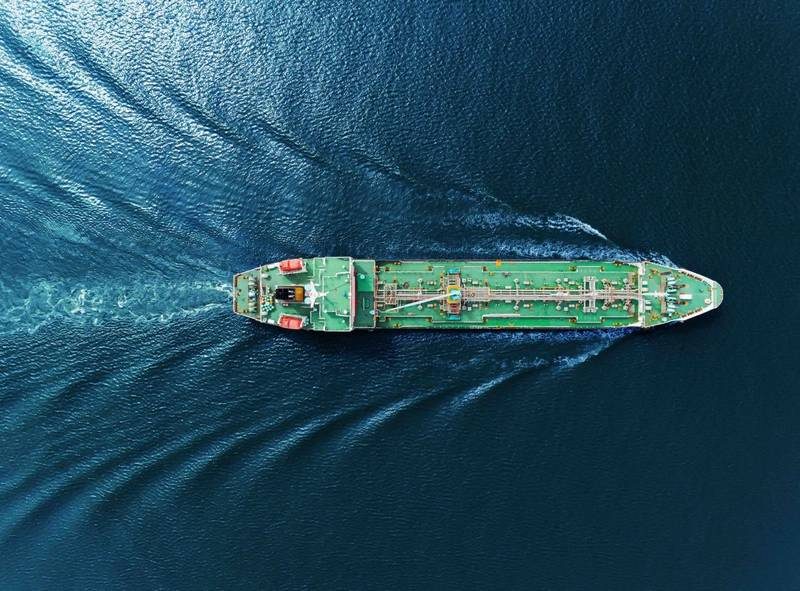
The announcement came during a weekend of incidents in and around the Strait of Hormuz. On Saturday, Iran's Islamic Revolutionary Guard Corps (IRGC) Navy said two oil tankers had struck mines near the strait and caught fire. Iranian state television, citing the navy, reported that the vessels had passed through an area described as unsafe, with their navigation systems switched off. The identities, flags, and ownership of the two vessels were not immediately disclosed, and the claims have not been independently verified.
The United Arab Emirates said its National Guard had rescued 22 people from a cargo ship that caught fire in the Gulf of Oman. The rescue came after the IRGC reported the tanker incidents, although the UAE did not say the two events were the same.
Separately, CENTCOM said on Saturday that US forces had disabled a commercial cargo vessel in the Gulf of Oman after it allegedly tried to breach the naval blockade of Iran. The ship was flagged in St Kitts and Nevis and had visited an Iranian port before trying to leave regional waters, CENTCOM said. The United Kingdom Maritime Trade Operations centre (UKMTO) said it had received a report of an incident involving a bulk carrier and military forces about 18 nautical miles east of Khor Fakkan in the United Arab Emirates.
There were also reports of explosions on land. Iran's official news agency IRNA reported the sound of two explosions on Qeshm Island, in the Strait of Hormuz, and of several explosions in the cities of Jask, Sirik, and Bandar Abbas. President Donald Trump confirmed new strikes on Qeshm Island a day earlier, but described them as minor. Iran's army said early on Saturday that it had destroyed a US-made MQ-9 drone using a new system, a claim the US did not confirm.
According to UKMTO, at least 11 ships were attacked in and around the Strait of Hormuz in the week to November 6.
The cost to Iraq and the region
The disruption is already costing the region heavily. Iraq's Foreign Minister, Fuad Hussein, told Al Jazeera that Iraq has suffered an estimated 60 billion dollars in economic losses following the suspension of oil exports through the Strait of Hormuz. Iraq exports most of its oil through the Gulf, so the closure of the strait hits its income directly.
Iran, meanwhile, has exempted ships from India, China, Iraq, and Qatar from its Strait of Hormuz restrictions, according to Amir Hayat Moqaddam, the deputy chairman of the Iranian parliament's National Security and Foreign Policy Committee. The exemptions suggest Tehran is trying to keep trade open with friendly states while it pressures others.
The United States is also putting pressure on Iran's nuclear programme. The US State Department said it is offering up to 20 million dollars for information about the programme, including its facilities, equipment, and associated personnel.
Why the Strait of Hormuz matters
The Strait of Hormuz is a narrow waterway between Iran and Oman, about 33 kilometres wide at its narrowest point. About a fifth of the world's traded oil and liquefied natural gas normally passes through it, making it one of the most important chokepoints in the world economy. Any threat to shipping there raises oil prices and worries governments far beyond the Gulf.
The strait has been a flashpoint before. In the 1980s, during the Iran-Iraq war, both sides attacked tankers in what became known as the Tanker War. In 2019, a series of attacks on tankers and the seizure of a British-flagged ship brought the United States and Iran close to open conflict. The current war, which began on February 28, 2026, is the longest and most intense confrontation over the strait since then.
Talks continue behind the fighting
Despite the escalation, talks have not stopped. Iran's Foreign Ministry confirmed that Tehran was reviewing the latest text from Washington, relayed through Pakistan, but urged a more realistic approach from Trump. Iran had earlier submitted a seven-day plan to end the war, and it was waiting for a US reply when the latest strikes hit Qeshm Island. Neither side has said the talks are over, but neither has agreed to a ceasefire.
What happens next
Three things are worth watching. First, whether Task Force Iron Gate changes anything on the ground. A land blockade is harder to enforce than a naval one, because Iran shares borders with seven countries. Second, whether shipping through the strait stays closed. As long as tankers are being hit by mines, insurers will keep rates high and many owners will keep their ships away. Third, whether the talks produce a deal. Both sides have said they are open to negotiations, but the fighting has not paused for them.
Frequently asked questions
What is Task Force Iron Gate?
Task Force Iron Gate is a new US military task force announced by CENTCOM on November 7, 2026. It is based in Tampa, Florida, and its job is to stop Iran moving advanced weapons, dual-use goods, sanctioned materials, and illegal money across its land borders and the Caspian Sea.
How is it different from the naval blockade?
The naval blockade, which has lasted for months, stops Iranian oil and goods at sea. Task Force Iron Gate extends the same effort to land routes, so that Iran cannot move the same goods by road or rail instead.
What happened to the two oil tankers near the Strait of Hormuz?
Iran's IRGC Navy said two oil tankers struck mines near the strait on Saturday, November 7, and caught fire. The IRGC said the tankers had used an unauthorised route with their navigation systems switched off. The claims have not been independently verified, and the ships have not been named.
Why is the Strait of Hormuz so important?
About a fifth of the world's traded oil and liquefied natural gas normally passes through the strait. It is the only sea route out of the Gulf, so any closure or threat to shipping affects oil prices and energy supplies around the world.
Are the US and Iran still talking?
Yes. Iran's Foreign Ministry said Tehran was reviewing the latest text from Washington, relayed through Pakistan. Iran had earlier submitted a seven-day plan to end the war. Talks continue, but no ceasefire has been agreed.