Abd al-Rahman III was the Umayyad ruler of Muslim Spain who turned the city of Cordoba into the greatest city in Europe and, in 929, took the title of caliph, making Spain a rival to Baghdad and Cairo. He ruled for almost fifty years, from 912 to 961, and his reign is remembered as the golden age of Al-Andalus, the name Muslims gave to their lands in Spain and Portugal.
A young ruler in a broken land
Abd al-Rahman was born in 891 in Cordoba, the capital of Muslim Spain. He was the grandson of the emir Abdullah, and he came to power at the age of 21, in 912, when his grandfather died. The land he inherited was in a bad state. Rebel lords controlled large parts of the south, the Christian kings in the north were pushing into Muslim lands, and the treasury was empty. Many people in Cordoba doubted that a young man could hold the state together.
He proved them wrong quickly. In his first years, he marched against the rebels one by one. He took the strongholds in the south, including the mountain town of Bobastro, the base of the rebel leader Umar ibn Hafsun, which fell in 928 after a long campaign. He rebuilt the army, put loyal men in charge of the provinces, and restored the tax system. By the end of the 920s, the whole of Muslim Spain answered to Cordoba again.
Why he became a caliph
In 929, Abd al-Rahman took a step that changed the history of the Muslim west. He declared himself caliph, the leader of all Muslims, and took the title al-Nasir li-Din Allah, meaning the defender of the religion of God. Before this, the rulers of Spain had called themselves emirs, a lesser title, while the real caliph was the Abbasid in Baghdad.
Abd al-Rahman had good reasons for the move. The Abbasid caliph in Baghdad had lost most of his power to his own generals, and a new rival caliphate, the Fatimids, had risen in North Africa and claimed the same title. Abd al-Rahman refused to accept the Fatimids as his leaders, and he wanted to show that Spain was an equal power, not a province of anyone. From 929, there were three men in the Muslim world calling themselves caliph: the Abbasid in Baghdad, the Fatimid in North Africa, and the Umayyad in Cordoba.
The builder of Madinat al-Zahra
Abd al-Rahman's most famous work was a palace city he built outside Cordoba. In 936, he began to build Madinat al-Zahra, the shining city, on the slopes of the hills west of Cordoba. It was a city of palaces, gardens, mosques and offices, built in white stone with marble floors and carved ivory doors. The caliph moved his court there in 945, and it became the seat of government for the rest of his reign. Today, the ruins of Madinat al-Zahra are a UNESCO World Heritage Site, and archaeologists are still digging there.
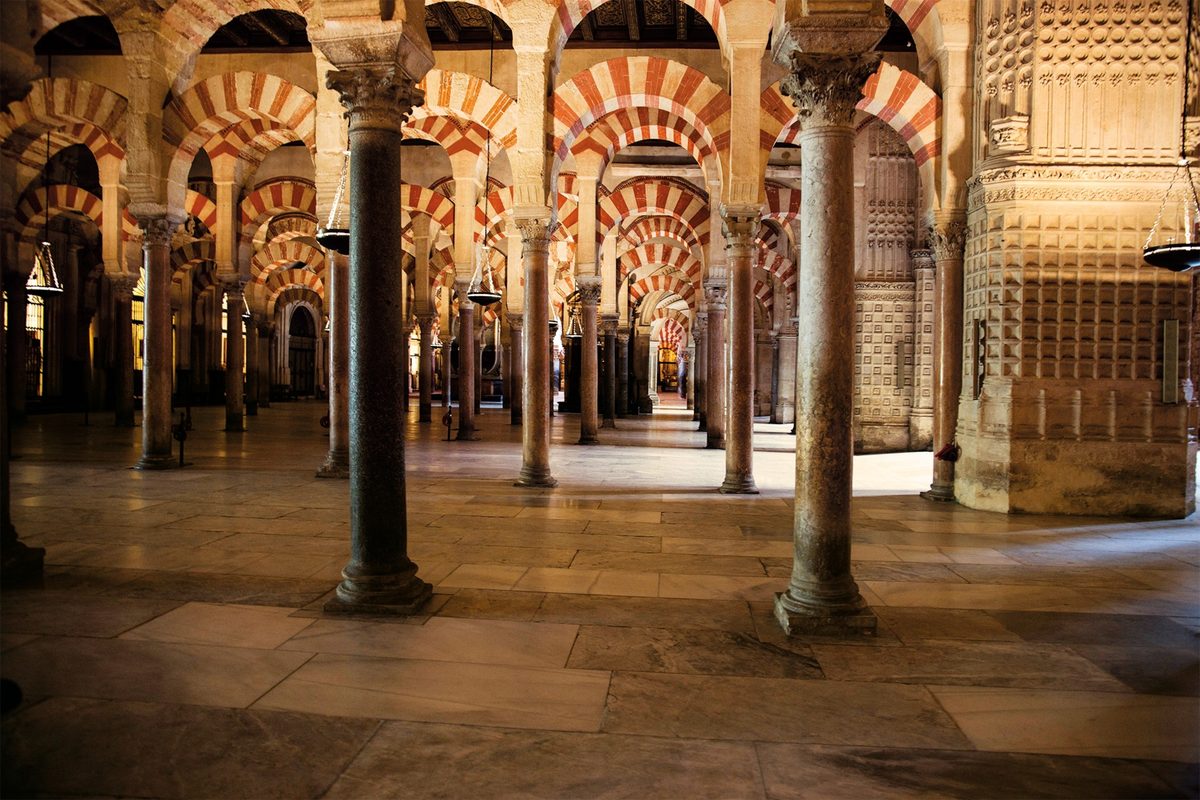
He also built up Cordoba itself. He enlarged the Great Mosque, adding a new minaret and a beautiful prayer hall with a richly decorated mihrab, the niche that shows the direction of prayer. Under his rule, Cordoba had paved streets, street lighting, running water and hundreds of mosques. Travellers wrote that the city had a great library, markets full of goods from across the world, and a palace where envoys from the Byzantine emperor, the German emperor and the kings of northern Spain came to seek the caliph's favour.
A golden age of learning
Cordoba under Abd al-Rahman III was a centre of learning. The caliph collected books, paid scholars and welcomed men of learning from across the Muslim world. His court had poets, historians, doctors and astronomers. His son and successor, al-Hakam II, later built the famous library of Cordoba, but it was Abd al-Rahman who made the city rich and safe enough for such learning to grow.
One of the most famous men at his court was Hasdai ibn Shaprut, a Jewish physician and scholar who served as the caliph's doctor and diplomat. Hasdai wrote letters to the Khazar king in the east and received envoys from Christian Europe. His work shows how Cordoba under Abd al-Rahman was a place where Muslims, Jews and Christians worked side by side in the same court, even if the caliph's rule was firmly Muslim.
Wars in the north and in Africa
Abd al-Rahman's reign was not all peace. In the north, he fought the Christian kings of Leon and Navarre, who were pushing south into Muslim lands. In 939, he led a large army against them and was defeated at the Battle of Simancas, one of the worst defeats of his reign. He never led an army in person again, but his generals held the frontier, and Cordoba stayed safe.
Across the sea, he fought the Fatimids of North Africa. He took the ports of Melilla in 927 and Ceuta in 931, giving Spain a foothold on the African coast and blocking the Fatimid advance towards Spain. These ports stayed in Spanish hands for centuries, and Ceuta is still Spanish today.
The ruler who counted his happy days
Abd al-Rahman died in 961, at the age of about 70, after a reign of 49 years. His son al-Hakam II took over a strong, rich and peaceful state. A famous story says that after his death, a note was found among his papers in which he had counted the days in his life when he had been truly happy. The number was fourteen. The story is probably a legend, but it fits a ruler who spent his life working, fighting and building, and who left behind the most splendid court in western Europe.
Why Abd al-Rahman III matters
Abd al-Rahman III matters because he made Muslim Spain a great power in its own right, not a distant province of Baghdad. He built the city that became the model of a Muslim capital in Europe, and his reign set the stage for the golden age of Cordoba that followed. For Muslims in Europe today, from Spain to Britain and France, his story is a reminder that Muslim rule in Europe was not a short episode. In Spain, it lasted almost 800 years, and its greatest days began with the young emir who became a caliph.
Frequently asked questions
When did Abd al-Rahman III rule?
He ruled from 912 to 961, almost 50 years. He became emir at the age of 21 and declared himself caliph in 929, about 17 years into his reign. He died in 961 and was followed by his son, al-Hakam II.
Why did Abd al-Rahman III call himself caliph?
He did it to show that Spain was independent and equal to the other Muslim powers. The Abbasid caliph in Baghdad had grown weak, and the Fatimids in North Africa had claimed the caliph's title. By taking the title himself, Abd al-Rahman made Cordoba a third centre of the Muslim world and refused to accept Fatimid rule.
What is Madinat al-Zahra?
Madinat al-Zahra was a palace city that Abd al-Rahman III built west of Cordoba, starting in 936. It held the caliph's palaces, government offices, gardens and mosques, and it became the seat of his court in 945. It was sacked in a civil war about 70 years later, and its ruins are now a UNESCO World Heritage Site.
What happened at the Battle of Simancas?
In 939, Abd al-Rahman III led his army north against the Christian kings of Leon and Navarre and was defeated at Simancas. It was his worst defeat, and he never commanded an army in person again. His generals still held the frontier, and Cordoba was never in danger.
Was Cordoba really the greatest city in Europe?
In the 900s, Cordoba was one of the largest and richest cities in Europe, with a population that may have reached several hundred thousand. It had paved and lit streets, running water, a great library and markets full of goods from three continents. Paris and London at the time were far smaller, so travellers often called Cordoba the finest city of the west.