On 15 June 1389, two armies met on Kosovo Field, a plain near the town of Pristina in the Balkans. On one side stood the Serbian prince Lazar Hrebeljanovic with his allies. On the other stood Sultan Murad I, the ruler of the Ottoman Empire. By the end of the day both leaders were dead, both armies were badly damaged, and the battle had become one of the most famous and most debated events in Balkan history. This is a plain summary of what happened, who won, and why people still talk about it more than 600 years later.
What happened on the day
The battle took place on St Vitus Day, known in Serbian as Vidovdan, 15 June 1389. The field was Kosovo Polje, the Field of Blackbirds, a wide plain about five kilometres from Pristina in what is today Kosovo. The Ottoman army had been moving north through the Balkans for years, taking towns and forcing local rulers to accept Ottoman rule. Prince Lazar, the most powerful Serbian ruler of his time, gathered an army to stop them.
Lazar led the Serbian side, with troops from his own lands and from his allies. The Bosnian king sent soldiers under the commander Vlatko Vukovic. Other Serbian lords brought their men too. The Ottoman army was led by Sultan Murad I himself, with his sons Bayezid and Yakub commanding the wings. Historians do not agree on exact numbers, because the sources from the time give very different figures. Common estimates put the Serbian force at around 15,000 to 20,000 men and the Ottoman force at around 27,000 to 40,000 men. The Ottomans were probably the larger army, but the difference was not huge.
The fighting began with archers on both sides. The Serbian heavy cavalry then charged the Ottoman left wing and broke through it. For a time the battle looked even, and some accounts say the Serbs pushed the Ottomans back. But the Ottoman centre and right wing held firm, and the Serbian line slowly came apart. By the afternoon the battle was over. Both armies had lost a large share of their men, and neither side could claim a clean victory on the field.
How Sultan Murad died
The most famous event of the battle is the death of Sultan Murad I. According to the best known account, a Serbian knight named Milos Obilic pretended to desert to the Ottoman side. He was brought before the sultan, and then he drew a hidden dagger and stabbed Murad. Milos was killed at once by the sultan's guards.
Historians still debate the details. Some sources say Murad was killed during the fighting itself, not in his tent. Others say a group of Serbian soldiers reached him. What is certain is that Murad died on the battlefield, the first and only Ottoman sultan to be killed in battle. His son Bayezid took command of the army at once, and he was proclaimed the new sultan on the field. Murad's body was taken back to Bursa, the Ottoman capital at the time, and buried there. His inner organs, in the custom of the time, were buried on Kosovo Field, where a small tomb called the Mesud-i Hudavendigar, or the Tomb of Sultan Murad, still stands today.
What happened to Prince Lazar
Prince Lazar was captured during the battle. According to the accounts that have come down to us, he was brought before Sultan Bayezid and executed, along with other Serbian prisoners. His body was later moved several times and is now kept at the Ravanica Monastery in Serbia, which Lazar himself had founded.
Lazar's death left Serbia without its strongest leader. His widow, Princess Milica, ruled as regent for their young son Stefan Lazarevic. Within a year Stefan accepted Ottoman overlordship, agreeing to pay tribute and to send soldiers to fight alongside the Ottomans. Serbia kept its own rulers for a time, but it was no longer fully independent. The Ottomans went on to take the rest of the Balkans, and Serbia itself fell fully under Ottoman rule in 1459, seventy years after Kosovo.
Who won the Battle of Kosovo?
The honest answer is that the battle was close to a draw on the day, but the Ottomans won the longer war. Both armies were badly hurt, and the Ottomans lost their sultan. But the Ottomans held the field at the end of the day, they kept their army together, and they had a new sultan ready to take over. The Serbs lost their prince, their army was broken, and their state never recovered its strength.
Some early sources, including reports that reached European courts, first described the battle as a Christian victory, because news of Murad's death arrived before news of Lazar's death. Later accounts corrected this. Modern historians mostly describe the battle as a tactical draw and a strategic Ottoman victory. The Ottoman advance into the Balkans slowed for a few years, because Bayezid first had to secure his throne and deal with rivals at home, but it did not stop. The Ottomans won the Battle of Nicopolis in 1396, took Constantinople in 1453, and ruled most of the Balkans for the next four centuries.
Why the battle still matters
The Battle of Kosovo became far more than a military event. In Serbian culture it grew into a national story, told and retold in epic poems and folk songs. The story of Lazar choosing a heavenly kingdom over an earthly one, and of Milos Obilic giving his life to kill the sultan, became central to Serbian identity. The date, Vidovdan, 28 June in the modern calendar, became a day of remembrance, and many important events in Serbian history happened on that date, including the assassination of Archduke Franz Ferdinand in Sarajevo in 1914, which helped start the First World War.
For the Ottomans and for the Muslims of the Balkans, the battle is remembered differently. It is the battle where an Ottoman sultan died on the field, and where Ottoman rule in the Balkans was confirmed by force. The tomb of Sultan Murad on Kosovo Field is still visited today, and the battle is part of the shared history of Kosovo, where Albanians and Serbs remember the same day in very different ways.
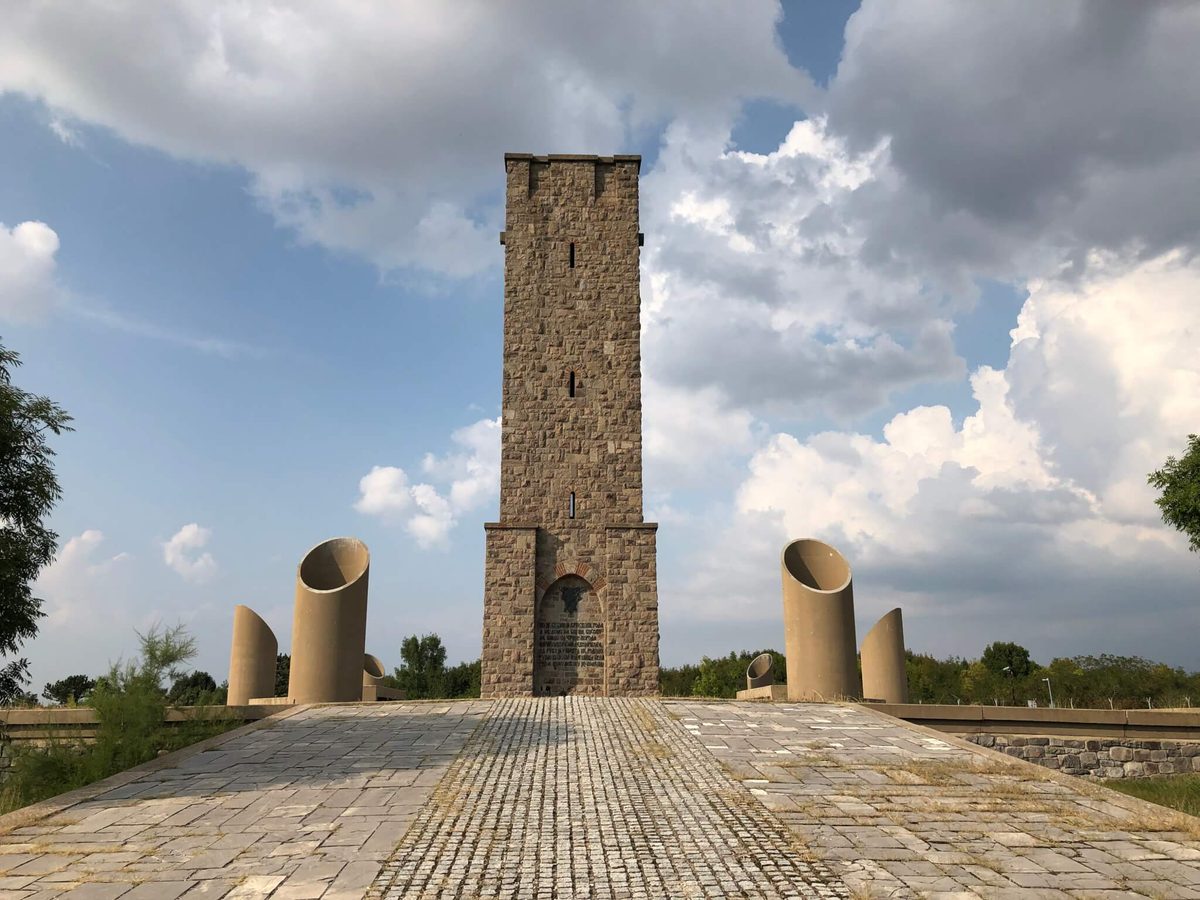
In 1953, a tall stone tower was built on Kosovo Field to mark the battle. It is called the Gazimestan monument, and it stands on the hill where the fighting is believed to have happened. Every year on Vidovdan, people gather there to remember the battle. The monument, and the field itself, show how a battle from 1389 still shapes how people in the Balkans see their history and their identity.
The Battle of Kosovo also matters for the wider story of Europe. It was one of the last times a united Balkan army tried to stop the Ottomans before they reached the gates of Vienna and the heart of Europe. After 1389, the road was open for the Ottoman Empire to become a European power, and the Balkans became the meeting point of the Christian and Muslim worlds for the next five hundred years.
Frequently asked questions
When was the Battle of Kosovo fought?
The Battle of Kosovo was fought on 15 June 1389, on St Vitus Day, known in Serbian as Vidovdan. It took place on Kosovo Field, a plain near Pristina in what is today Kosovo.
Who fought in the Battle of Kosovo?
The Serbian side was led by Prince Lazar Hrebeljanovic, with Bosnian troops under Vlatko Vukovic and other Serbian lords. The Ottoman side was led by Sultan Murad I, with his sons Bayezid and Yakub commanding the wings.
Who won the Battle of Kosovo?
The battle was close to a draw on the day, and both sides lost many men. Historians call it a tactical draw but a strategic Ottoman victory, because the Ottomans held the field, kept their army together, and went on to take the Balkans, while Serbia lost its leader and never recovered its strength.
How did Sultan Murad die?
Sultan Murad I was killed on the battlefield. The best known account says the Serbian knight Milos Obilic pretended to desert, was brought before the sultan, and stabbed him with a hidden dagger. Historians debate the exact details, but Murad's death on the field is certain.
What happened to Prince Lazar after the battle?
Prince Lazar was captured during the battle and executed on the orders of Sultan Bayezid. His widow Milica ruled as regent for their son Stefan, who soon accepted Ottoman overlordship. Serbia fell fully under Ottoman rule in 1459.