On Friday, November 13, 2026, Iran's Revolutionary Guards said they had targeted a US early-warning radar in Bahrain, in what they described as retaliation for an attack on Iranian soil. The claim came on the same day that Iran's military said four oil tankers had been hit by explosions in the Strait of Hormuz. Together, the two reports marked a sharp rise in tension after a fragile lull in the war between Iran and the United States. Much of what happened is still unverified.
What Iran claimed about Bahrain
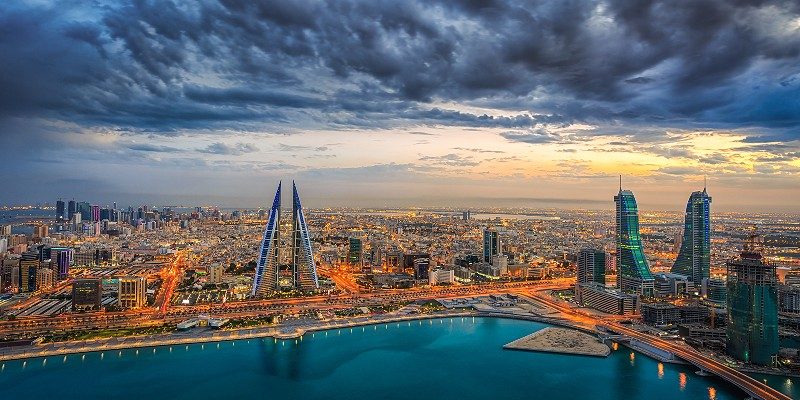
Iran's Islamic Revolutionary Guard Corps, known as the IRGC, said on Friday that its aerospace forces had targeted and destroyed a US military early-warning radar in Bahrain. The IRGC said the action was in retaliation for what it described as an air attack on a telecommunications tower in Sirik, a port city in Iran's southern Hormozgan province, near the Strait of Hormuz.
According to Reuters, it was the first time since early September that Iran had claimed an attack on US military assets in a Gulf country. The IRGC called the strike a serious warning to the enemy to stop what it said was a series of aerial provocations in the Strait of Hormuz.
There was no immediate comment from the United States or from Bahrain when the reports were published, and no independent evidence of damage to the radar site, casualties, or the weapon used was available. The claim has therefore been reported as a claim, not as a confirmed strike.
Bahrain matters because it hosts the headquarters of the US Navy's Fifth Fleet, which runs American naval operations across the Middle East. An attack on US assets there would be a major step, which is why the lack of confirmation from the US or Bahrain is important.
The attack on Sirik
Hours before the Bahrain claim, Iran's state news agency IRNA reported that the port city of Sirik in Hormozgan province had been hit by enemy fire on Thursday. IRNA said the incident involved a military strike but did not name the attacker or give details about targets, damage or casualties. Sirik sits on Iran's southern coast, east of the Strait of Hormuz. The IRGC said the attack on the telecom tower there was the reason for its action in Bahrain. The United States has not commented on the Sirik reports either.
Four tankers hit in the Strait of Hormuz
In a separate development, Iran's military said on Thursday that four oil tankers had been hit by explosions in the Strait of Hormuz, after what it said was a violation of restrictions it has placed on shipping through the waterway.
Iran's Revolutionary Guards Navy said two supertankers had been disabled by explosions on Wednesday night after they ignored warnings against using what Tehran called an unauthorised route. Iranian state media said the two vessels had hit naval mines, and that they were carrying a combined total of more than four million barrels of oil. Iran's army later said two more tankers east of the strait had caught fire after hitting a mine. The names and nationalities of the four vessels were not given.
Reuters reported that it could not immediately verify the Iranian account. But the United Kingdom Maritime Trade Operations agency, known as UKMTO, said that a vessel had been hit by an unidentified projectile about 14 nautical miles northwest of Ras Al Khaimah in the United Arab Emirates on Wednesday, while leaving the strait, causing a fire in its engine room. That report is the only independent confirmation so far of a ship being struck in the area this week.
Trump says the US does not need a deal
On Wednesday, November 12, US President Donald Trump wrote on his Truth Social platform that the United States no longer needed to reach a deal with Iran. "We don't need a deal with Iran. Those days are long gone. We have their money, hundreds of billions of dollars, and we have their strait!" he wrote.
Trump was referring to Iranian funds held in foreign banks because of US sanctions, which Tehran estimates at more than 100 billion dollars, and to the US naval blockade, which restricts shipping to and from Iranian ports while allowing ships serving other Gulf countries to pass.
The message came days after Trump said on November 9 that he was temporarily suspending further airstrikes against Iran, after several Gulf countries urged Washington to avoid escalating the situation again.
Iran's position on the strait
On November 11, Iran's Parliament Speaker Mohammad Bagher Ghalibaf said the Strait of Hormuz would never return to its pre-war status, when foreign ships could pass through without Iran's permission. He said its future would be set within a seven-point framework proposed by Tehran, which had been conveyed through Qatari mediators.
Iran's proposal includes demands for the US to lift sanctions and the naval blockade, release Iran's frozen assets, and end hostilities across the region. Tehran has said it wants any peace deal to recognise its control over shipping through the strait. The United States has not publicly responded to the seven conditions.
Why the Strait of Hormuz matters
The Strait of Hormuz is a narrow passage between Iran and Oman, linking the Persian Gulf to the Gulf of Oman and the open sea. About a fifth of the world's oil shipped by sea passes through it, along with large amounts of liquefied natural gas. Most of the oil exported by Saudi Arabia, Iraq, Kuwait, the United Arab Emirates and Qatar travels through the strait, so any disruption there can push up oil prices around the world. On Thursday, Brent crude oil settled at around 96 dollars a barrel. The US has said its blockade targets Iranian oil exports, but the attacks on tankers show that shipping in the strait remains dangerous for all vessels.
A short history of the strait
The Strait of Hormuz has been a point of conflict for centuries. In the 1500s, the Portuguese seized Hormuz island and held the strait for about a hundred years. In the 1980s, during the Iran-Iraq war, both sides attacked oil tankers in a period known as the Tanker War. The current conflict began on February 28, 2026, when the United States and Israel launched strikes on Iran.
What to watch next
Three questions will shape the next days. First, whether the United States or Bahrain confirms or denies the radar claim. Second, whether Washington responds to Iran's seven conditions. Third, whether oil prices rise further. For now, the facts are these: Iran has made a major claim about Bahrain, four tankers have been reported hit in the strait, and neither side has shown signs of a deal.
Frequently asked questions
What did Iran claim happened in Bahrain on November 13, 2026?
Iran's Revolutionary Guards said they targeted and destroyed a US early-warning radar in Bahrain, in retaliation for an alleged air attack on a telecom tower in Sirik, Iran. The US and Bahrain had not commented, and the damage is unverified.
What happened to the four tankers in the Strait of Hormuz?
Iran's military said four oil tankers were hit by explosions on Wednesday and Thursday, and that two supertankers hit naval mines after using an unauthorised route. Reuters could not verify the account, but the UK maritime agency UKMTO confirmed a vessel was hit by a projectile near Ras Al Khaimah.
Why is the Strait of Hormuz so important?
About a fifth of the world's seaborne oil passes through the strait, along with large amounts of liquefied natural gas. It is the only sea route out of the Persian Gulf, so any disruption there can push up oil prices worldwide.
Did Trump say the US would stop striking Iran?
On November 9, Trump said he was temporarily suspending further airstrikes against Iran. On November 12, he wrote that the US did not need a deal with Iran, and the US naval blockade of Iran continues.
What are Iran's seven conditions?
Iran's Parliament Speaker Mohammad Bagher Ghalibaf said on November 11 that Tehran had proposed a seven-point framework for the future of the Strait of Hormuz. Its reported demands include lifting US sanctions and the naval blockade, releasing frozen Iranian assets, and ending hostilities.