Salahuddin al-Ayyubi, known in the West as Saladin, was the first sultan of Egypt and Syria and the founder of the Ayyubid dynasty. He was born in 1137 in Tikrit, in modern Iraq, to a Kurdish military family. He is best known for defeating the Crusader army at the Battle of Hattin in 1187 and recapturing Jerusalem a few months later. For Muslims he is remembered as a hero who united a divided region. For many in Europe he is remembered as a chivalrous opponent, a reputation that grew out of the Third Crusade and the stories told about him afterwards.
Early life and rise
Salahuddin's father, Najm al-Din Ayyub, was a soldier and administrator who served the Zengid rulers of Syria. Salahuddin grew up in Baalbek and Damascus, and he learned the skills of a soldier and a courtier. His early career was shaped by his uncle, Shirkuh, a general of Nur al-Din Zengi, the ruler of Aleppo and Damascus.
In the 1160s, Egypt became the centre of a struggle between the Crusader kingdom of Jerusalem and the Zengids. Egypt was ruled by the Fatimid caliphs, but their power was weak, and both sides wanted to control the Nile. Shirkuh led three expeditions into Egypt, and Salahuddin went with him. Shirkuh died in 1169, and Salahuddin took his place as the commander of the Syrian forces in Egypt. Within two years he had ended the Fatimid caliphate, in 1171, and made Egypt part of the Sunni world again.
Nur al-Din died in 1174. Salahuddin moved quickly. He took Damascus, then Aleppo, then Mosul, and over the next decade he brought Egypt, Syria, and northern Mesopotamia under one rule. He was not a king by birth. He built his power step by step, through war, marriage, and patient diplomacy, and by 1186 he controlled a state that stretched from Libya to northern Iraq.
The Battle of Hattin
Salahuddin's great test came against the Crusader kingdom of Jerusalem. The Crusaders had held the coast of the Levant since 1099, and they were divided by quarrels among their own leaders. In July 1187, the Crusader king, Guy of Lusignan, marched his army out of the stronghold of Sepphoris towards Tiberias, in the heat of summer, with little water.
Salahuddin trapped the Crusader army on the slopes of the Horns of Hattin, a double hill west of the Sea of Galilee. His men set fire to the dry grass, cut off the wells, and attacked the thirsty and exhausted Crusaders. By the end of the day on July 4, 1187, the Crusader army was destroyed. King Guy was captured, along with the True Cross, the relic the Crusaders carried into battle. The master of the Templars and many other leaders were killed.
Hattin broke Crusader power in the region. City after city opened its gates to Salahuddin in the weeks that followed. Acre, Jaffa, and Ascalon fell. Then he turned to Jerusalem.
The recapture of Jerusalem
Jerusalem had been in Crusader hands since 1099. Salahuddin reached the city in September 1187 and laid siege to it. The defenders, led by Balian of Ibelin, held out for two weeks, but the city could not be saved. On October 2, 1187, Jerusalem surrendered.
The way Salahuddin treated the defeated city is a large part of his reputation. When the Crusaders had taken Jerusalem in 1099, they had massacred its Muslim and Jewish population. Salahuddin did not do the same. He allowed Christians to leave in safety, and he set ransoms that the poor could pay. Orthodox Christians were allowed to stay. The city's churches were not destroyed, although the Dome of the Rock and the Aqsa Mosque, which the Crusaders had used as a church and a palace, were restored as Muslim places of worship. Western writers of the time praised his conduct, and that praise shaped his image in Europe for centuries.
The Third Crusade
The fall of Jerusalem shocked Europe. The pope called for a new crusade, and three kings set out: Frederick Barbarossa of Germany, Philip II of France, and Richard I of England, known as Richard the Lionheart. Frederick drowned on the way. Philip left after the siege of Acre. Richard stayed and fought Salahuddin for two years, from 1189 to 1192.
The two leaders met in battle at Arsuf in 1191, where Richard won, and at Jaffa in 1192, where neither side could win a clear victory. Richard never retook Jerusalem. In September 1192, the two men signed the Treaty of Jaffa. Jerusalem stayed in Muslim hands, but Christians were allowed to visit the Holy Sepulchre, and the Crusaders kept a strip of coast from Jaffa to Tyre. The treaty also gave the war a three year truce.
Richard and Salahuddin never met in person, but the stories of their respect for each other became famous. Later writers in Europe turned Salahuddin into a model of chivalry, and he appears in Dante's work as a virtuous non-Christian, placed among the great men of the past.
Ruler, builder, and family man
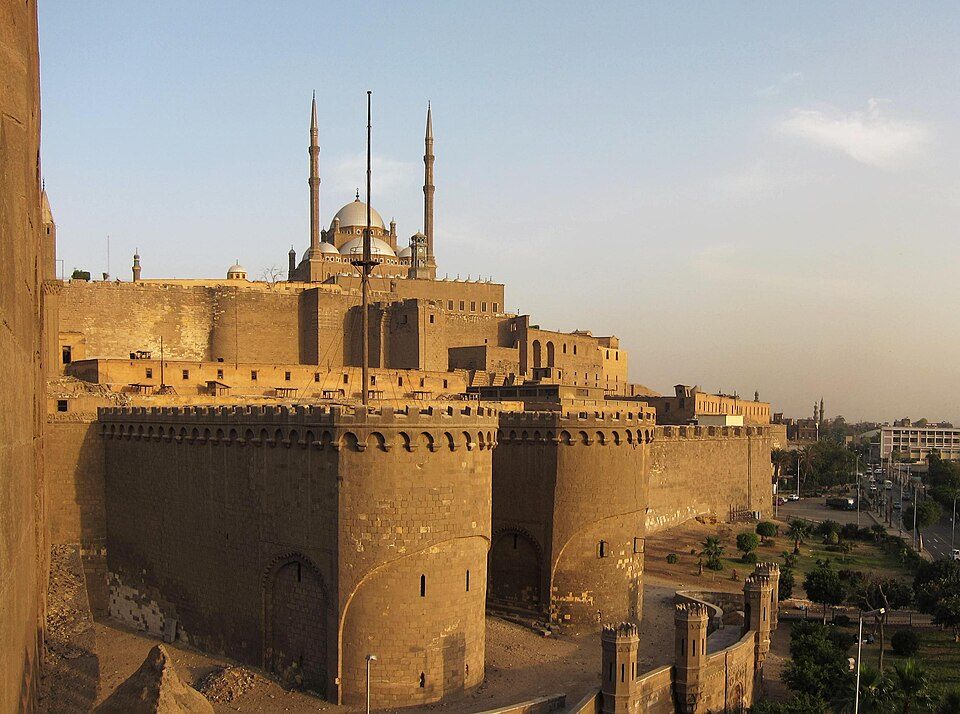
Salahuddin was more than a general. He built schools, hospitals, and mosques across his lands, and he rebuilt the walls of Cairo and Jerusalem. The Citadel of Cairo, which still stands above the city, was his work. He was known for simple living. Accounts of his life describe a man who gave away his wealth, wore plain clothes, and spent long hours in prayer and study. When he died, his treasury was almost empty, and his family had to borrow money for his burial.
He founded the Ayyubid dynasty, named after his father. After his death, his sons and brothers divided his lands among themselves. The dynasty ruled Egypt until 1250, and parts of Syria and Yemen for longer, until the Mamluks and later the Ottomans took over.
Death and legacy
Salahuddin fell ill in February 1193, shortly after the treaty with Richard. He died in Damascus on March 4, 1193, at the age of 56. He was buried in a small mausoleum beside the Umayyad Mosque, where his tomb still stands.
His legacy has lasted for more than eight centuries. In the Muslim world he is remembered as the sultan who united Egypt and Syria and took back Jerusalem. In the West he is remembered as the noble enemy of the Crusades. His life is taught in schools across the Middle East, his name is given to streets and squares, and his story is still told as an example of leadership, patience, and generosity in victory.
Frequently asked questions
When was Salahuddin born and when did he die?
Salahuddin was born in 1137 in Tikrit, in modern Iraq. He died in Damascus on March 4, 1193, at the age of 56.
What was Salahuddin's greatest victory?
His greatest victory was the Battle of Hattin on July 4, 1187, where he destroyed the Crusader army of the kingdom of Jerusalem. The victory opened the way for him to recapture Jerusalem later that year.
How did Salahuddin recapture Jerusalem?
After Hattin, he laid siege to Jerusalem in September 1187. After two weeks, the city surrendered on October 2, 1187. He allowed the Christians to leave in safety and did not massacre the population.
Did Salahuddin fight Richard the Lionheart?
Yes. Richard I of England led the Third Crusade against him from 1189 to 1192. They fought at Arsuf and Jaffa, and then signed the Treaty of Jaffa in 1192. Jerusalem stayed in Muslim hands, and Christians were allowed to visit the Holy Sepulchre.
What did Salahuddin build?
He built the Citadel of Cairo, rebuilt the walls of Cairo and Jerusalem, and founded schools, hospitals, and mosques across Egypt and Syria. He also founded the Ayyubid dynasty, which ruled Egypt until 1250.