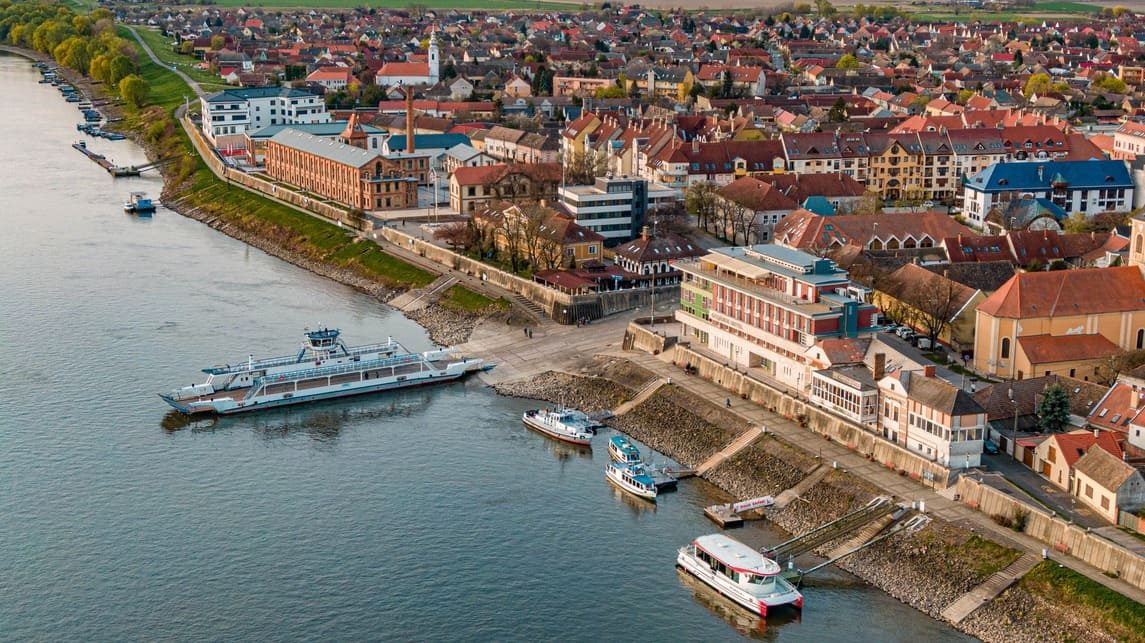
On 29 August 1526, on a plain near the town of Mohacs in southern Hungary, the Ottoman army of Sultan Suleiman the Magnificent met the army of King Louis II of Hungary. The battle lasted about two hours. When it was over, the Hungarian army was destroyed, the young king was dead, and the kingdom of Hungary had effectively ceased to exist as an independent state. The Ottoman victory opened the road to Central Europe and changed the map of the continent for the next 150 years.
Hungary before the battle
In the early 1500s, Hungary was one of the largest kingdoms in Europe. It covered much of the Danube basin, including the lands that are now Hungary, Slovakia, Croatia, and parts of Romania and Serbia. Its kings had held back the Ottomans for over a century, and the southern border forts along the Danube formed a strong line of defence.
But by 1526, the kingdom was weak inside. King Louis II was only 20 years old. He had come to the throne as a child, and the great Hungarian lords had grown used to ruling without a strong king. They quarrelled with each other, refused to pay taxes, and ignored the king's calls to prepare for war. The royal treasury was empty. The border forts were short of men, money, and gunpowder.
The Ottomans, meanwhile, were at the height of their power. Suleiman had become sultan in 1520. In 1521, he took Belgrade, the key fortress guarding the road into Hungary. In 1522, he took the island of Rhodes. The Ottoman army was the best organised fighting force in Europe, with professional infantry, the Janissaries, a strong corps of artillery, and large numbers of cavalry. When Suleiman marched north in the spring of 1526, he led an army of around 50,000 to 60,000 men, with about 300 cannon.
The march to Mohacs
Suleiman left Istanbul in April 1526. His army crossed the Danube and moved up through the Balkans. In July, the Ottomans took the fortress of Petrovaradin, and in August they crossed the Drava river and entered Hungary proper. The road to Buda, the Hungarian capital, lay open.
Louis II gathered his army at Buda and marched south to meet the invaders. His army was much smaller, around 25,000 to 30,000 men. It included the Hungarian nobility and their heavy cavalry, foot soldiers, and a small number of guns. Louis also expected help. A large army from Croatia under Count Christopher Frankopan, and another force from Transylvania under John Zapolya, were marching to join him. Both were still days away when the battle began, and Louis decided not to wait for them. Many historians have called this his fatal mistake.
The battle
On 29 August, the two armies met on a plain near Mohacs, close to the Danube. The Hungarians held high ground, with the sultan and his Janissaries and artillery in the Ottoman centre. The battle began in the late afternoon. The Hungarian heavy cavalry, the best fighting men in the kingdom, charged the Ottoman right wing. The charge was fierce and at first it seemed to work. The Hungarian knights broke through the Rumelian cavalry and drove them back. Some of the Hungarian horsemen rode as far as the Ottoman camp, where they saw the sultan's tent.
But the charge had carried them too far, and it had broken their order. As the Hungarian cavalry regrouped, they faced the centre of the Ottoman line. There, the Janissaries stood behind a wall of carts chained together, with their muskets ready and their cannon in place. The Ottoman guns opened fire at close range. The Hungarian horsemen were cut down in large numbers. The guns and muskets of the Janissaries were too much for cavalry that had no way to answer them.
The Ottoman cavalry then closed in from both sides, and the Hungarian army was trapped. The fighting turned into a slaughter. The Hungarian foot soldiers were killed where they stood. The battle lasted about two hours. When it ended, around 15,000 to 20,000 Hungarian soldiers were dead, including most of the bishops and great lords of the kingdom. The Ottoman losses were much smaller, probably around 1,000 to 2,000 men.
The death of King Louis
King Louis II did not die on the battlefield. As the Hungarian army broke apart, he tried to escape with a small group of his men. They rode south towards the Danube, but they came to a small stream, the Csele, which was swollen with rain. The banks were steep and muddy. According to the accounts of the time, the king's horse slipped as it tried to cross, and Louis, weighed down by his heavy armour, drowned in the stream. His body was found later, and he was buried in the city of Szekesfehervar.
Louis was 20 years old, and he left no heir. His death threw Hungary into a crisis over who would be the next king. Two men claimed the throne. One was Ferdinand of Habsburg, the brother of the Holy Roman Emperor Charles V, who was married to Louis's sister. The other was John Zapolya, the voivode of Transylvania, who had the support of many Hungarian nobles. The kingdom split between them, and the dispute turned into a civil war.
The division of Hungary
Suleiman did not stay in Hungary after the battle. He marched to Buda and took the capital without a fight, then he withdrew his army to Istanbul for the winter. But the victory had broken Hungary. Over the next 15 years, the Ottomans came back again and again. In 1541, Suleiman took Buda for good, and Hungary was divided into three parts. The centre of the country, including Buda, became Ottoman Hungary. The west and north, including Croatia and Slovakia, came under the Habsburgs as Royal Hungary. The east became the Principality of Transylvania, which paid tribute to the Ottomans but kept its own prince.
This division lasted for about 150 years. It was only in 1699, after the Ottoman defeat at the Siege of Vienna in 1683 and a long war, that the Habsburgs took back most of Hungary under the Treaty of Karlowitz.
Why Mohacs mattered
The Battle of Mohacs is often called the end of the medieval Hungarian kingdom. In a single afternoon, the kingdom lost its king, its army, and most of its leading men. The battle showed how much warfare had changed. The Hungarian army fought in the old way, with a great charge of heavy cavalry. The Ottomans fought in the new way, with gunpowder, artillery, and disciplined infantry. At Mohacs, the new way won.
In Hungary, Mohacs is still remembered as a national disaster. The date, 29 August 1526, is one of the best known dates in Hungarian history. The town of Mohacs has a memorial park where the dead are remembered, and the battle is still studied as the day a kingdom fell in two hours.
Frequently asked questions
Who won the Battle of Mohacs in 1526?
The Ottoman Empire won. Sultan Suleiman the Magnificent defeated the Hungarian army of King Louis II on 29 August 1526. The Hungarian army was destroyed, and the king was killed while trying to escape.
How long did the Battle of Mohacs last?
The battle lasted about two hours. The Hungarian cavalry charged in the late afternoon, and by the early evening the Hungarian army had been broken and the fighting was over.
How did King Louis II of Hungary die?
Louis II died while fleeing the battlefield. His horse slipped as he tried to cross the rain-swollen Csele stream near Mohacs, and he drowned, weighed down by his armour. He was 20 years old.
What happened to Hungary after the Battle of Mohacs?
Hungary was divided into three parts. The centre became Ottoman Hungary, the west and north came under the Habsburgs as Royal Hungary, and the east became the Principality of Transylvania. The division lasted about 150 years, until the Treaty of Karlowitz in 1699.
Why is the Battle of Mohacs important?
It ended the independent medieval kingdom of Hungary and opened Central Europe to Ottoman power. It also showed the power of gunpowder warfare, as Ottoman artillery and Janissary muskets defeated the traditional Hungarian heavy cavalry charge.