The history of Muslims in France began more than 1,300 years ago, when Muslim armies reached the south of the country in the 700s. Today, France is home to the largest Muslim population in Western Europe, with estimates of around 5 to 6 million people, or roughly 8 to 10 percent of the population. Because France does not ask about religion in its census, no exact figure exists, but every serious estimate puts France first in Western Europe by the size of its Muslim community.
This is the story of how that community grew, from medieval soldiers and traders to colonial subjects, wartime soldiers, post-war workers and the French citizens of today.
The first Muslims in France
Muslims first arrived in France in the early 700s, not long after the Muslim conquest of Spain. In 719, Muslim forces from Al-Andalus crossed the Pyrenees and took Narbonne, a port city on the Mediterranean coast. They held the city and the surrounding region, known as Septimania, for about forty years. Muslims also reached as far north as Poitiers, where in 732 a Frankish army led by Charles Martel defeated a Muslim force at the Battle of Tours, sometimes called the Battle of Poitiers.
Muslim raiders later held a base at Fraxinetum, near modern Saint-Tropez, until 972, and Muslim merchants traded with French ports for centuries after that.
For most of the Middle Ages, however, there was no settled Muslim community in France. Muslims were visitors, traders and sometimes enemies, not neighbours.
Algeria and the colonial connection
The modern story of Muslims in France begins with Algeria. In 1830, France invaded Algeria, and over the next decades it took control of Algeria, Tunisia and Morocco. Algeria became legally part of France in 1848, which meant that Algerians were French subjects, though not full citizens. This colonial link is the reason most French Muslims today trace their roots to North Africa.
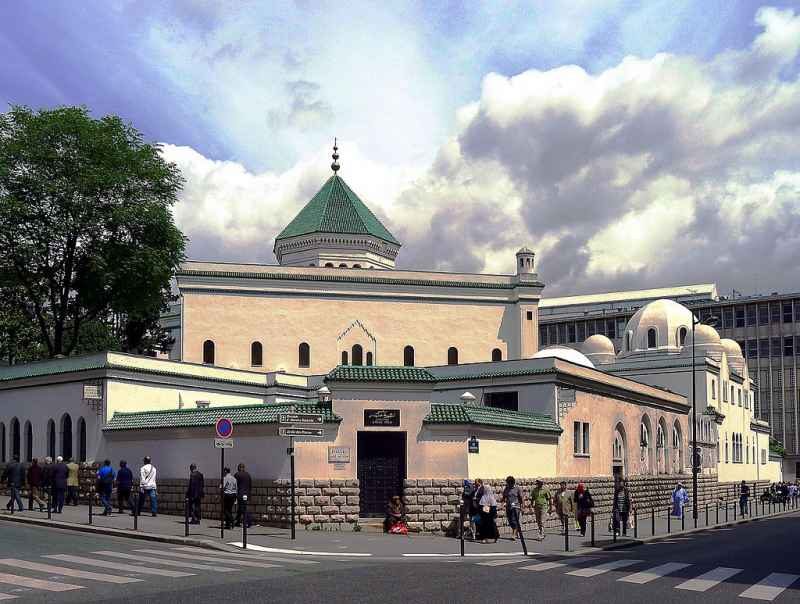
By the late 1800s, North Africans were coming to France to work. The first wave was small: sailors, soldiers and labourers in French ports and factories. During the First World War, France recruited hundreds of thousands of colonial troops, including tens of thousands of Muslim soldiers from North Africa and West Africa. Many of them died fighting for France. The Paris mosque, the Grande Mosquée de Paris, was built after the war partly to honour them. It opened in 1926 and remains the oldest mosque in mainland France.
Between the wars, the North African population in France grew slowly. By the 1930s, there were around 100,000 North Africans living in France, most of them Algerian men working in factories and mines. Many lived in poor housing and faced discrimination, but they also built the first prayer rooms, cafes and associations of the modern Muslim community.
War, independence and arrival
The Second World War brought another wave of Muslim soldiers. North and West African troops fought in the French army, and many were killed or taken prisoner. After the war, France needed workers to rebuild. From the late 1940s onwards, it recruited labour from its colonies and former colonies, above all from Algeria, Morocco and Tunisia.
The Algerian War of Independence, from 1954 to 1962, changed everything. Algerians in France were caught between the two sides. Some supported independence, and some, known as harkis, served as auxiliaries in the French army. When Algeria became independent in 1962, tens of thousands of harkis and their families came to France, where many were placed in camps and faced years of hardship.
In the 1960s and 1970s, labour migration continued. France signed agreements with Morocco in 1963 and Tunisia in 1963 that brought in workers for factories, construction and mines. The workers were mostly young men who planned to return home. But in 1974, after the oil crisis, France stopped labour migration, and the government allowed workers to bring their families instead. This policy of family reunification turned a population of temporary workers into a settled community. Wives and children arrived, and a second generation grew up in France.
By the 1980s, Muslims in France were no longer a small group of workers. They numbered in the millions, and they were becoming French. The second and third generations were born in France, spoke French as their first language and went to French schools.
Mosques, organisations and daily life
As the community settled, it built institutions. The number of mosques and prayer rooms in France grew from a few dozen in the 1970s to around 2,500 today. The largest mosques include the Grande Mosquée de Paris, the Grande Mosquée de Lyon, opened in 1994, and the Strasbourg Grand Mosque, opened in 2012.
In 2003, the French government helped create the French Council of the Muslim Faith, known as the CFCM, to give the Muslim community a single body to talk to the state about issues such as mosque building, halal food and the training of imams. The council has had a difficult history, with rival groups disagreeing over who should lead it, and the government has since worked with a separate body, the Forum of Islam in France, created in 2023.
Muslims in France today are mostly of North African origin, from Algeria, Morocco and Tunisia, but the community also includes people from sub-Saharan Africa, Turkey, the Comoros and South Asia. They live in every region of the country, with large communities in Paris, Marseille, Lyon, Lille and Strasbourg. Many run businesses, work in public services and take part in politics. France has had Muslim mayors, members of parliament and ministers.
The debate about Islam in France
No history of Muslims in France is complete without the debates that have shaped it. France follows a strict form of secularism, known as laïcité, which keeps religion out of public institutions. This has led to a series of laws and arguments about where Islam fits in French public life.
In 2004, France passed a law banning conspicuous religious symbols, including the hijab, in state schools. In 2010, it banned the full face veil in public places. In 2021, a law against separatism gave the state new powers over religious associations and foreign funding of mosques. Supporters of these laws say they protect secularism and the rights of women. Critics say they single out Muslims and make daily life harder for them.
At the same time, studies have shown that people with North African names face more difficulty finding jobs and housing, and many French Muslims say they are seen as outsiders even when they were born in France. The 2015 attacks in Paris, which killed 130 people, added to the tension.
Muslims in France today
Despite the debates, Muslims are a normal and lasting part of France. Most French Muslims say they feel French and Muslim at the same time. They observe Ramadan, celebrate Eid, and take part in French public life. Mosques run food banks and youth clubs. Muslim athletes, artists and writers are part of French culture, from footballers such as Zinedine Zidane, the son of Algerian immigrants, to writers, chefs and business leaders.
The story of Muslims in France is not a short one. It runs from the soldiers of the 700s to the workers of the 1960s and the French-born generations of today. It is a story of arrival, settlement and belonging, and it is still being written.
Frequently asked questions
When did Muslims first arrive in France?
Muslims first arrived in France in the early 700s, when forces from Muslim Spain took Narbonne in 719 and held parts of the south for about forty years. A settled Muslim community only developed much later, from the 1800s onwards, through colonial links with North Africa.
How many Muslims live in France today?
France does not collect religious data in its census, so there is no official number. Estimates generally put the Muslim population at around 5 to 6 million people, or roughly 8 to 10 percent of the population, making it the largest Muslim population in Western Europe.
What is the oldest mosque in France?
The Grande Mosquée de Paris, opened in 1926, is the oldest mosque in mainland France. It was built in part to honour the Muslim soldiers who died fighting for France in the First World War.
Where do most French Muslims come from?
Most French Muslims trace their roots to North Africa, above all Algeria, Morocco and Tunisia, because of France's colonial history there. There are also large communities from sub-Saharan Africa, Turkey and the Comoros.
What is laïcité?
Laïcité is the French principle of secularism. It means the state is neutral towards religion and keeps religion separate from public institutions such as state schools. It is a central part of French law and public life, and it shapes many of the debates about Islam in France.