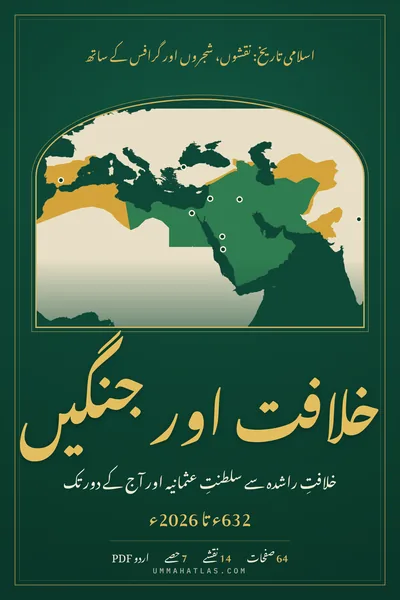
Muslims ruled parts of Spain for almost 800 years, from 711 to 1492. That is the short answer. The full answer is more interesting, because Muslim rule did not cover the same land for all of those 781 years. It began with a fast conquest of most of the peninsula, shrank over the centuries as Christian kingdoms pushed south, and ended with one small kingdom, Granada, holding out in the south until 1492.
The period is known in Spanish as the Reconquista, the long Christian campaign to retake the land, and in Arabic sources the Muslim-ruled land was called al-Andalus. For much of this time, Muslim Spain was one of the richest and most learned places in Europe.
The conquest of 711
In the spring of 711, a Muslim army crossed the Strait of Gibraltar from North Africa. It was led by Tariq ibn Ziyad, a Berber general serving the Umayyad governor of North Africa. The army was small, about 7,000 men at first, later joined by about 5,000 more under Musa ibn Nusayr.
The Visigothic king of Spain, Roderick, met Tariq's army at the Battle of Guadalete, near the river of the same name in the south. Roderick was killed, and his army broke apart. The Visigothic kingdom was already divided by rival claimants to the throne, and many of its cities surrendered on terms rather than fight. Within a few years, Muslim forces had taken Cordoba, Seville, Toledo and most of the peninsula, reaching as far north as the mountains of the Pyrenees.
The conquest was fast, but it was not complete. Small Christian kingdoms survived in the far north, in Asturias and the Basque country, in the mountains where the Muslim armies did not settle. Those small kingdoms would grow over the centuries and become the starting point of the Christian reconquest.
The Umayyad Emirate and Caliphate
At first, Muslim Spain was a province ruled from Damascus by the Umayyad Caliphate. In 756, a survivor of the fallen Umayyad family, Abd al-Rahman I, arrived in Spain, took Cordoba, and made himself emir, an independent ruler. His descendants ruled al-Andalus for nearly 300 years.
The high point came under Abd al-Rahman III, who ruled from 912 to 961. In 929, he declared himself caliph, the leader of the whole Muslim world in the west, and made Cordoba the capital of a caliphate to rival Baghdad. Cordoba in the 900s was one of the largest cities in Europe, with a population often given as around 100,000, though exact figures are uncertain. It had paved streets, running water, hundreds of mosques, and a great library. The Great Mosque of Cordoba, begun in 785 and enlarged over two centuries, became one of the most famous buildings in the Muslim world.
The caliphate was a place where Muslims, Christians and Jews lived side by side. That is sometimes painted as a golden age of tolerance, and it is true that Cordoba's scholars included people of all three faiths. It is also true that non-Muslims paid a special tax and had a lower legal status. The reality was mixed, as it usually is: a rich, learned society that was still a society of its time.
The taifa kingdoms
The Umayyad Caliphate of Cordoba collapsed in a civil war in the early 1000s. In 1031, the caliphate was formally abolished, and al-Andalus broke into about 20 small kingdoms, called taifas. Each taifa was ruled by a local prince, and they spent much of their energy fighting each other.
The taifa period weakened Muslim Spain badly. The Christian kingdoms in the north, now united and stronger, began to take land. In 1085, Alfonso VI of Castile took Toledo, one of the great cities of the centre, after a long siege. The taifa rulers, frightened, called for help from North Africa.
Help came in two waves. First the Almoravids, a strict Berber movement from the Sahara, crossed the strait in 1086 and won a battle at Sagrajas, but they also took over the taifas and ruled them from North Africa. Then the Almohads, another North African movement, replaced the Almoravids in the 1140s. Both movements ruled more strictly than the old Umayyads had.
The Christian advance
The turning point came in 1212, at the Battle of Las Navas de Tolosa. A large Christian army, led by the kings of Castile, Aragon, Navarre and Portugal, defeated the Almohad army in the mountains of southern Spain. After that victory, the Christian advance was fast. Cordoba fell in 1236. Seville fell in 1248. Valencia fell in 1238. Within a generation, Muslim rule in Spain was reduced to one small kingdom in the far south.
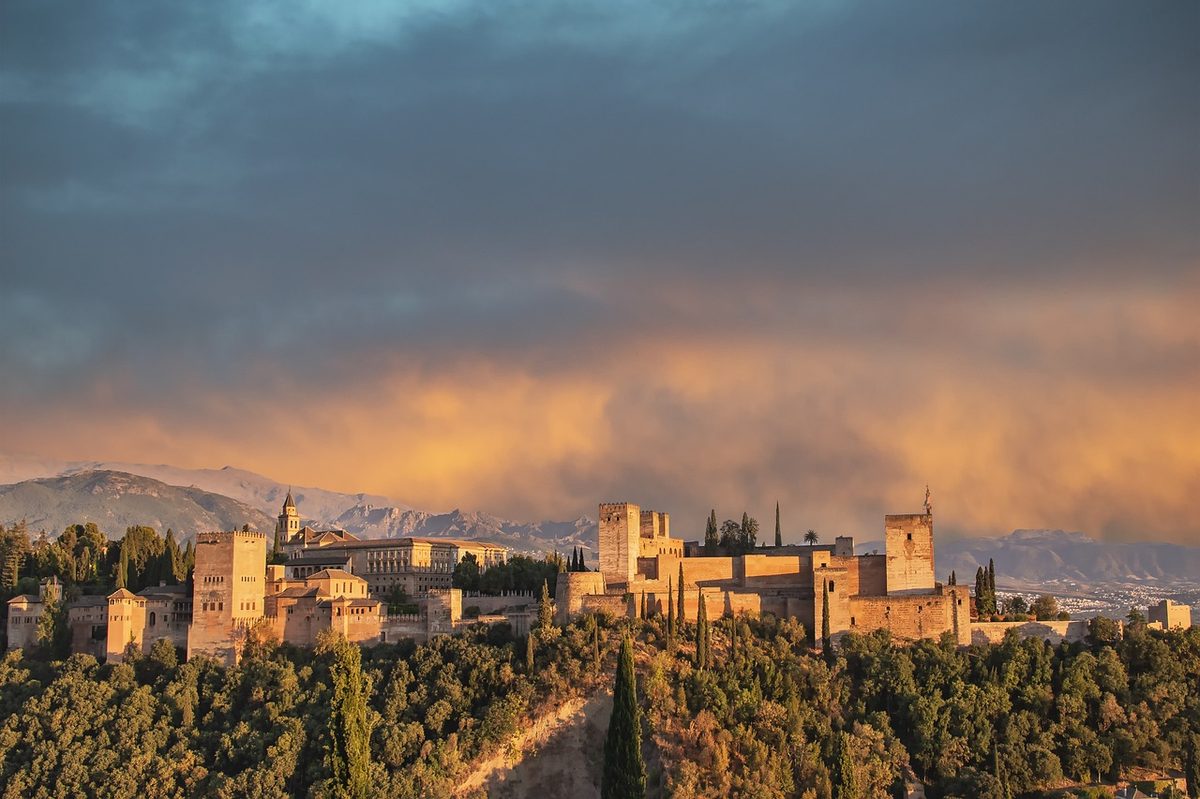
That kingdom was Granada. In 1238, Muhammad ibn al-Ahmar, known as Ibn al-Ahmar, founded the Nasrid dynasty in Granada. The Nasrids survived for more than 250 years by paying tribute to Castile, by playing Castile and Aragon against each other, and by the fact that Granada was protected by mountains and was hard to conquer. In Granada, they built the Alhambra, a palace and fortress of courtyards, fountains and carved plaster that is still one of the most visited buildings in Spain.
1492 and the end of Muslim rule
In 1469, the marriage of Ferdinand of Aragon and Isabella of Castile united the two great Christian kingdoms. They turned their full strength against Granada. After a ten-year war, the last Nasrid king, Muhammad XII, known in Spanish history as Boabdil, surrendered Granada on 2 January 1492.
The surrender terms promised the Muslims of Granada the right to keep their religion, their property and their customs. Within a few years, those promises were broken. The Spanish crown ordered conversions, and in 1609, the Moriscos, the descendants of Spain's Muslims, were expelled from the country altogether. Hundreds of thousands of people left for North Africa.
So the count is this: from the landing of Tariq ibn Ziyad in 711 to the fall of Granada in 1492 is 781 years. But for most of that time, Muslims did not rule all of Spain. The north was never conquered, the taifa kingdoms shrank year by year, and by the 1200s only Granada remained. A fairer way to say it is that Muslim rule in Spain lasted nearly eight centuries, but its size changed from a near-total conquest to a single mountain kingdom.
What remains of Muslim Spain
The legacy of those 781 years is still visible across Spain. The Great Mosque of Cordoba stands in the centre of the city, now a cathedral but still known by its old name, the Mezquita. The Alhambra in Granada draws millions of visitors a year. The Giralda tower in Seville was built as a minaret. Words from Arabic survive in Spanish in their hundreds: algebra, coffee, sugar, guitar, and place names like Guadalajara and Alcala. Irrigation systems built in Muslim times still water fields in Valencia.
For European Muslims today, al-Andalus is a living memory: Islam was part of Europe for centuries, long before modern migration.
Frequently asked questions
How many years did Muslims rule Spain?
Muslims ruled parts of Spain for 781 years, from the landing of Tariq ibn Ziyad in 711 to the fall of Granada on 2 January 1492. They did not rule the whole peninsula for all of that time. The north was never conquered, and after 1248 only the Kingdom of Granada remained.
Who ruled Muslim Spain?
Muslim Spain, known as al-Andalus, was ruled in turn by governors sent from Damascus, the Umayyad emirs and caliphs of Cordoba (756 to 1031), the taifa kings, the Almoravids and Almohads from North Africa, and finally the Nasrid kings of Granada (1238 to 1492).
What was the capital of Muslim Spain?
Cordoba was the capital for most of the period. It was the seat of the Umayyad emirs and then of the Caliphate of Cordoba, and it was one of the largest and most learned cities in Europe in the 900s. After the caliphate fell, Granada became the last Muslim capital.
Why did Muslim rule in Spain end?
It ended because the Christian kingdoms of the north grew stronger and more united while Muslim Spain split into small rival kingdoms. The decisive defeats were Las Navas de Tolosa in 1212 and the fall of the great cities in the 1200s. The union of Castile and Aragon under Ferdinand and Isabella in 1469 made the final conquest of Granada possible.
Are there still Muslims in Spain today?
Yes. Spain has a Muslim population of over two million people today, including Spanish converts, descendants of immigrants from Morocco and other countries, and newer arrivals. The historic Muslim heritage of Andalusia, including the Mezquita of Cordoba and the Alhambra, remains one of the most visited parts of the country.