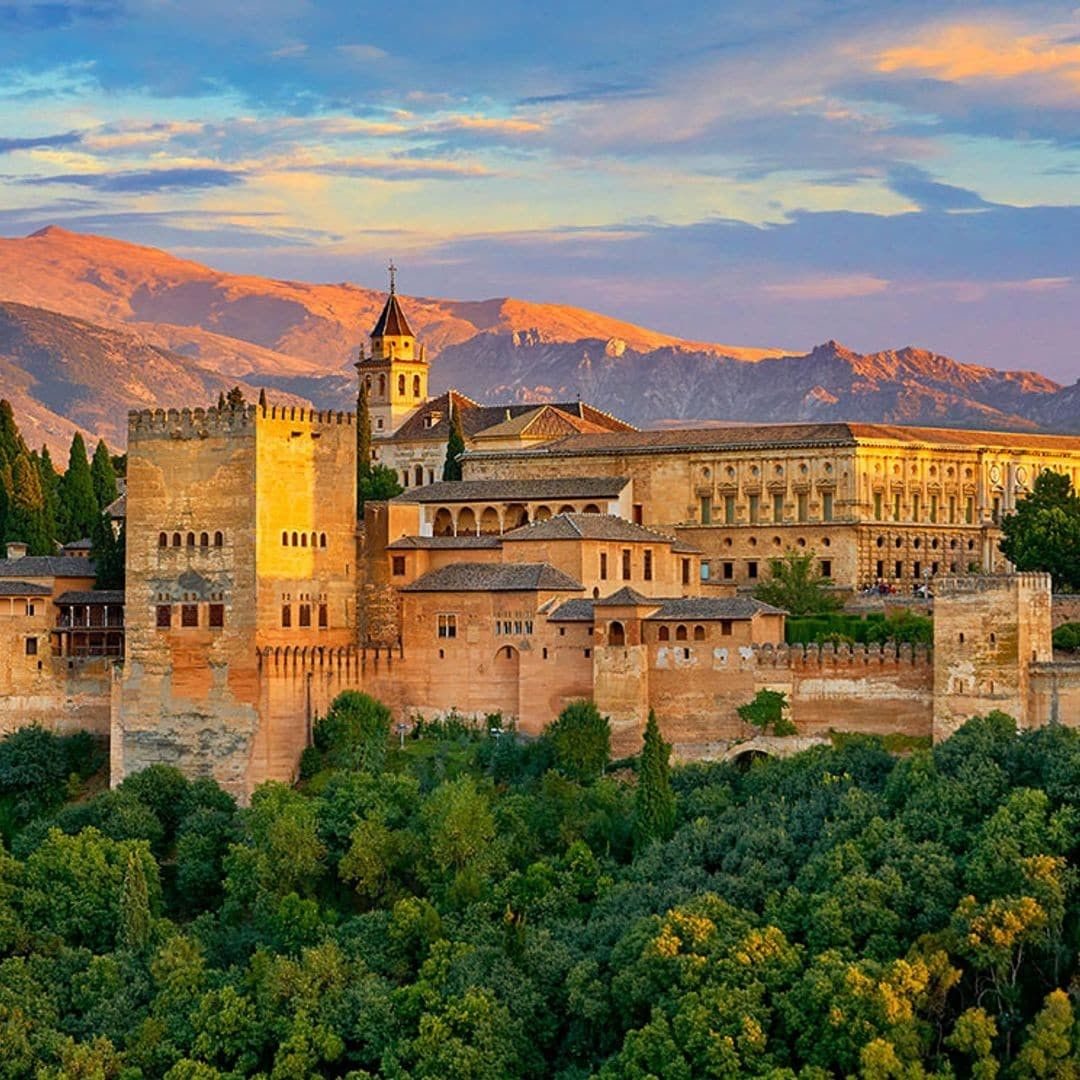
On 2 January 1492, the Muslim kingdom of Granada surrendered to the Catholic rulers Ferdinand and Isabella. It was the last Muslim state on the Iberian Peninsula, and its fall ended almost 800 years of Muslim rule in Spain. But the story of the Muslims of Spain did not end in 1492. Around half a million Muslims still lived in Spain after the surrender, and what happened to them over the next 120 years is a story of broken promises, forced conversion, revolt, and finally expulsion.
The promise of Granada
The surrender of Granada came with a written agreement called the Treaty of Granada. It promised the Muslims of the city that they could keep their religion, their language, their customs, and their property. They could keep their mosques, their courts, and their way of life. For the first few years, this promise was kept. The first archbishop of Granada, Hernando de Talavera, took a gentle approach. He learned Arabic, preached in the language of the people, and tried to win converts by persuasion rather than force.
Life for the Muslims of Granada in those first years was not easy, but it was still recognisably their own. They farmed, traded, and worshipped as they had before. Many of the Christian rulers of the time saw this as a working arrangement. Granada had surrendered peacefully, and the treaty was meant to keep the peace.
Forced conversion begins
The gentle approach did not last. In 1499, Cardinal Francisco Jimenez de Cisneros arrived in Granada. He believed that persuasion was too slow, and he began to force Muslims to convert to Christianity. He ordered the burning of Arabic books, including copies of the Quran, and he had Muslim leaders arrested. His methods caused a revolt in the Albaicin, the old Muslim quarter of Granada, in late 1499.
The revolt was put down, and the Spanish crown used it as a reason to break the treaty. In 1502, a royal order was issued for Castile: every Muslim had to convert to Christianity or leave Spain. Those who stayed and converted became known as Moriscos, a word that means "little Moors". They were Christians in name, but most of them kept their Muslim faith, language, and customs in private.
The same pattern followed in the kingdom of Aragon. In 1526, the Muslims of Aragon and Valencia were given the same choice: convert or leave. By the 1530s, there were officially no Muslims left in Spain. In reality, hundreds of thousands of Moriscos lived across the country, especially in Valencia, Aragon, and Andalusia.
Life as Moriscos
The Moriscos lived in a difficult position. In public they attended church, gave their children Christian names, and ate pork at public feasts to prove they were Christians. At home many of them still spoke Arabic, washed before prayer, avoided pork and wine, and kept the fast of Ramadan. They were watched by neighbours, priests, and the Inquisition, the church court that investigated people suspected of secretly keeping another faith.
In 1567, King Philip II issued a new set of rules that banned the Arabic language, Muslim dress, and Morisco customs. The Moriscos were told to speak only Spanish and to dress like Christians. The order was the final push that led to open revolt.
The revolt of the Alpujarras
On Christmas Eve 1568, the Moriscos of the Alpujarras, the mountain region south of Granada, rose in revolt. They chose a leader from the old Nasrid royal family and crowned him as king under the name Muhammad ibn Umayya. The revolt lasted more than two years and turned into a hard war. Spanish troops, including the king's half-brother Don John of Austria, fought the rebels village by village.
The revolt ended in 1571 with defeat for the Moriscos. As punishment, about 80,000 Moriscos were moved out of Granada and scattered across Castile, far from their homes. Their villages in the Alpujarras were given to Christian settlers from the north. The scattering was meant to break their community and make them easier to watch. It did not make them loyal. If anything, it spread the Morisco population across the whole country.
The expulsion of 1609
By the early 1600s, the Spanish government had decided that the Moriscos could never be trusted. In 1609, King Philip III ordered their expulsion. The order was carried out between 1609 and 1614. Around 300,000 Moriscos were forced to leave Spain. They were allowed to take some of their belongings, but not gold, silver, or weapons. Many were robbed on the road to the ports. Ships took them across the sea to North Africa, mainly to Morocco, Algeria, and Tunisia. Others went to France, Italy, and the Ottoman lands.
The expulsion was a disaster for parts of Spain. In Valencia, where Moriscos made up about a third of the population, whole villages were left empty. Farms and irrigation systems fell into ruin because the skilled farmers were gone. The silk and sugar industries of the region were badly damaged. The Spanish crown had removed a community that it feared, but it had also removed some of its most productive people.
What happened to the expelled Moriscos
In North Africa, the Moriscos settled in cities like Fez, Tetouan, Algiers, and Tunis. They built new neighbourhoods, and they kept Spanish customs, language, and food for generations. Some of their descendants in Morocco still speak a form of old Spanish today, and the city of Tetouan is known for its Andalusian character, which comes from the Morisco families who settled there.
In Tunisia, the Moriscos founded towns such as Zaghouan and Testour, where Spanish-style architecture and food traditions can still be seen. In the Ottoman Empire, some Moriscos joined the navy or the army, and a few became corsairs who raided Spanish ships, which was the very thing Spain had feared.
Why this history still matters in Europe
The story of the Muslims of Spain after 1492 is one of the most important chapters in the history of Muslims in Europe. It shows how a large Muslim community that had lived in Europe for centuries could be forced to choose between its faith and its home. It also shows how much of Spanish culture, from food and farming to language and architecture, came from the Muslim centuries.
Today, Spain is home to a growing Muslim population again, many of them from Morocco and other countries. The history of the Moriscos is remembered in Granada, in the Albaicin quarter, and in the festivals and museums of Andalusia. It is a reminder that Muslims are not new to Europe. They were part of its history for nearly 800 years, and their story did not end when Granada fell. It continued in the mountains of the Alpujarras, in the ports of Valencia, and in the cities of North Africa, where the descendants of the expelled Moriscos still live today.
Frequently asked questions
What happened to the Muslims of Spain after 1492?
After Granada fell in 1492, the Muslims of Spain were first promised religious freedom under the Treaty of Granada. That promise was broken in 1499, and in 1502 they were ordered to convert to Christianity or leave. Those who converted became known as Moriscos. After a failed revolt in 1568, the Moriscos were finally expelled from Spain between 1609 and 1614.
Who were the Moriscos?
The Moriscos were Muslims in Spain who had been forced to convert to Christianity. They lived as Christians in public, but many of them kept Islamic customs, the Arabic language, and Muslim traditions at home. They were suspected of secretly remaining Muslims, and they were watched by the Inquisition.
How many Moriscos were expelled from Spain?
Around 300,000 Moriscos were expelled from Spain between 1609 and 1614. Most of them went to North Africa, to Morocco, Algeria, and Tunisia. Others went to France, Italy, and Ottoman lands.
Why were the Moriscos expelled in 1609?
The Spanish government did not trust the Moriscos. Officials believed they kept a separate identity, secretly practised Islam, and might support the Ottoman Empire in a war against Spain. After the revolt of the Alpujarras in 1568, the government decided that the only solution was to remove the whole community.
Where did the Moriscos go after the expulsion?
Most went to North Africa. They settled in cities like Fez, Tetouan, Algiers, and Tunis, and they founded new towns such as Zaghouan and Testour in Tunisia. Their descendants still live in these places today, and some still keep Spanish language and customs from their ancestors.