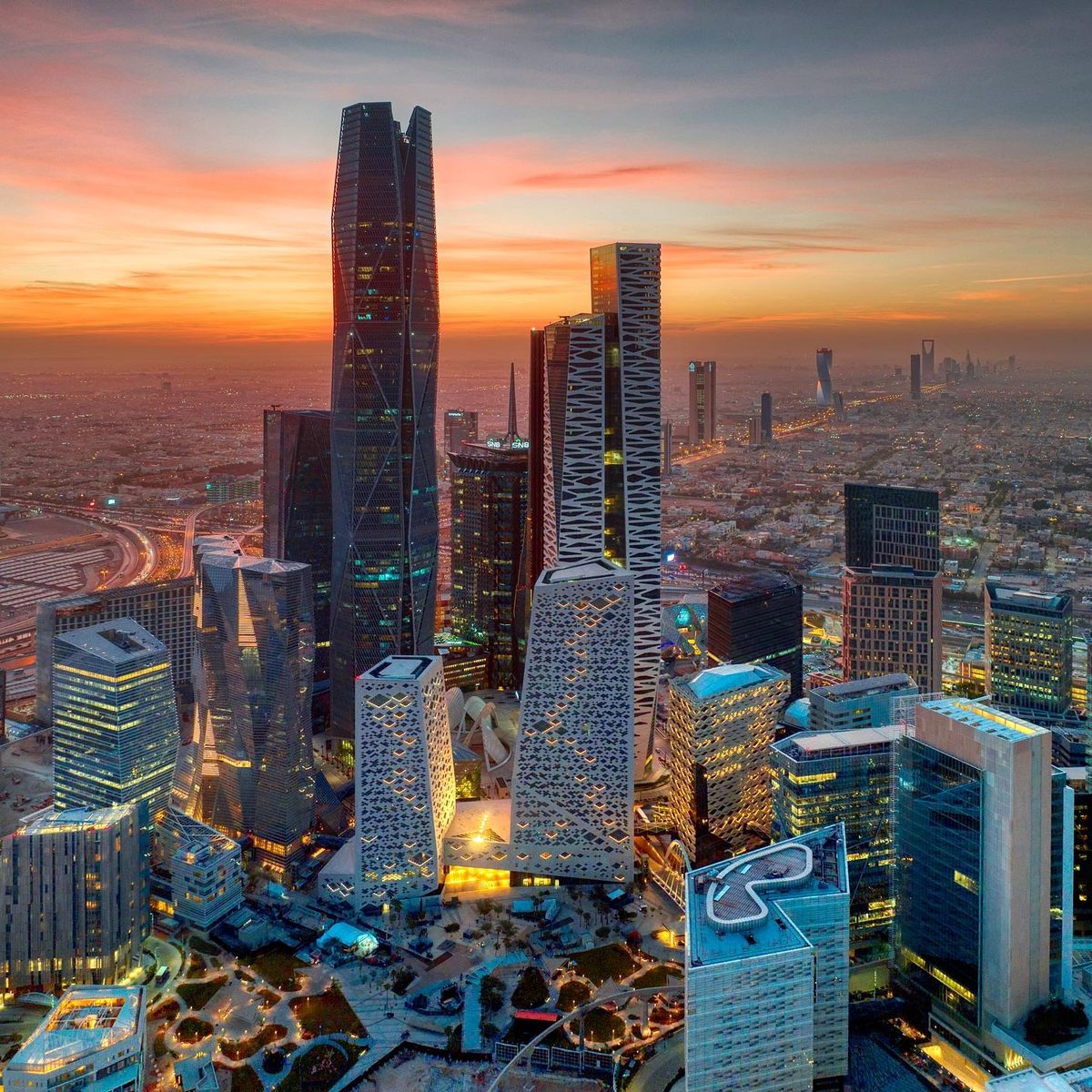
On Thursday, November 19, 2026, a Houthi attack damaged a tower in the King Abdullah Financial District in Riyadh, the capital of Saudi Arabia. Saudi Arabia's Civil Defence agency said the attack caused material damage to the tower and nearby buildings, but no injuries were reported. Photographs published by the Saudi Press Agency identified the building as the PIF Tower, the headquarters of Saudi Arabia's sovereign wealth fund and the tallest skyscraper in Riyadh.
The attack is the latest in a series of Houthi strikes on Saudi Arabia during a war that has now lasted nine months, and it struck at the heart of the kingdom's financial centre.
What happened on November 19
In the early hours of Thursday, people in Riyadh heard a powerful blast, according to the news agency AFP. The Saudi-led coalition fighting the Houthis said it had dealt with a missile threat launched towards Riyadh and that debris had fallen. Later in the day, Saudi Arabia's Civil Defence agency confirmed that a tower in the financial district had been damaged, though its statement did not name the building. The photograph published by the Saudi Press Agency showed the PIF Tower.
According to Reuters, the strike blew out windows across seven to eight floors of the building and bent sections of its metal facade. The King Abdullah Financial District was closed to visitors after the attack. Three sources familiar with the matter told Reuters that the building had been struck by an incoming Houthi missile.
The Houthis, the armed group that controls Yemen's capital and is also known as Ansar Allah, said they had targeted Riyadh's financial centre twice on Thursday, first at dawn and again in the evening. They also said they had attacked King Khalid International Airport in Riyadh, the Khamis Mushait airbase in southern Saudi Arabia and the SADAF petrochemical company in Jubail, in the kingdom's Eastern Province. There was no immediate Saudi confirmation of those claims.
The Saudi-led coalition said its air defences intercepted and destroyed four ballistic missiles launched by the Houthis towards the southern region of the country. It also said it had destroyed a ballistic missile launchpad used in the attempted attacks on Riyadh, and it intercepted a cruise missile fired towards southern Saudi Arabia. The Houthi-run Saba news agency reported that Saudi aircraft had carried out air strikes on the Houthi-controlled Yemeni capital, Sanaa, early on Thursday.
Saudi Arabia's response
Saudi Arabia's Foreign Ministry condemned the attacks on civilian sites, including the tower. In a statement, it said the kingdom reserved the right to take all necessary measures to defend its sovereignty, safeguard its national assets and protect the security and safety of its citizens and residents. It called on the international community to fulfil its responsibilities, implement United Nations Security Council resolutions and condemn the attacks.
The United Arab Emirates also condemned the attacks in the strongest terms, according to Gulf News.
This was the second time in less than two weeks that a Houthi attack had damaged a major building in Riyadh's financial district, according to Arabian Business. Houthi attacks have hit Riyadh several times in recent weeks, including strikes on the airport area in late October, though the PIF Tower attack is the most serious so far in terms of the building it hit.
What is the PIF Tower
The PIF Tower stands 385 metres high, with 80 storeys, and it dominates the King Abdullah Financial District, the showcase of Saudi Arabia's economic ambitions. PIF stands for the Public Investment Fund, the sovereign wealth fund of Saudi Arabia. The fund plays a central role in financing the kingdom's economic diversification and its major development projects under the Vision 2030 plan, including the futuristic city of Neom and the Red Sea tourism project.
Because of this, the tower is more than an office building. It is a symbol of Saudi Arabia's plan to move beyond oil and of the wealth fund that pays for that plan. An attack that damages it is a strike on one of the most visible symbols of the Saudi economy.
The wider war
The attack on Riyadh is part of a much wider conflict. The war began on February 28, 2026, when Israel and the United States launched joint strikes on Tehran and other Iranian cities. Iran retaliated with waves of missile and drone attacks on Israel and on US military bases across the region, and it tightened its control over the Strait of Hormuz, the narrow waterway through which a large share of the world's oil is shipped.
The Houthis are aligned with Iran, and attacks on ships in the Strait of Hormuz reached a record level in October 2026, according to figures cited by NPR. The United States has been escorting ships through the strait, and it has struck missile sites on Qeshm Island, an Iranian island in the strait.
The war has also been costly. The United States' war on Iran has cost more than 48 billion dollars, a Pentagon official told lawmakers, according to AFP. An analysis by the Associated Press of satellite imagery found that more than 115 attacks claimed by Iran and allied groups had damaged 26 military bases and facilities housing US assets across the Middle East.
At the same time, diplomacy continues. Iran's Foreign Minister Abbas Araghchi has held talks in Oman, Turkey and Pakistan this week about reopening the Strait of Hormuz, and Iran has proposed reopening the strait within two days if agreements are reached. The US President, Donald Trump, said on Thursday that he would wait until after the new year before deciding on any new round of strikes on Iran, even as Israel presses Washington to move sooner. The New York Times reported that the US is considering striking dams in Iran, and the IRGC, Iran's Revolutionary Guard, said any such attempt would be met with a comparable response.
Why this attack matters
The PIF Tower attack matters for three reasons. First, it shows that the Houthis can still hit the centre of Riyadh, despite Saudi air defences. Second, it strikes at a symbol of Saudi economic power, not just a military target. Third, it comes at a moment when the wider war is at a turning point, with the US weighing new strikes, Iran talking about reopening the strait, and Saudi officials saying they now expect the campaign in Yemen to stretch on for up to six months.
For now, the damage is limited: no one was hurt, and the tower still stands. But the attack is a reminder that the war in the Gulf is not only being fought at sea or on distant battlefields. It has reached the centre of one of the region's richest cities.
Frequently asked questions
What happened to the PIF Tower in Riyadh?
On November 19, 2026, a Houthi attack damaged the PIF Tower in the King Abdullah Financial District in Riyadh. According to Reuters, windows were blown out across seven to eight floors and parts of the metal facade were bent. Saudi authorities said there was material damage but no injuries.
What is the PIF Tower?
The PIF Tower is the headquarters of Saudi Arabia's Public Investment Fund, the kingdom's sovereign wealth fund. At 385 metres and 80 storeys, it is the tallest skyscraper in Riyadh and the centrepiece of the King Abdullah Financial District.
Who are the Houthis?
The Houthis, also known as Ansar Allah, are an armed group that controls the capital of Yemen, Sanaa, and much of northern Yemen. They are aligned with Iran and have been fighting a Saudi-led coalition since 2015.
Why did the Houthis attack Riyadh?
The Houthis have been attacking Saudi Arabia for years as part of the war in Yemen. The recent attacks are also linked to the wider war between the US, Israel and Iran, which began on February 28, 2026. The Houthis are allied with Iran, and they have stepped up attacks on Saudi targets and on shipping in the region.
How did Saudi Arabia respond?
Saudi Arabia's Foreign Ministry condemned the attack and said the kingdom reserved the right to take all necessary measures to defend its sovereignty and protect its citizens and national assets. The Saudi-led coalition said it intercepted missiles aimed at Riyadh and the south, and destroyed a missile launchpad.