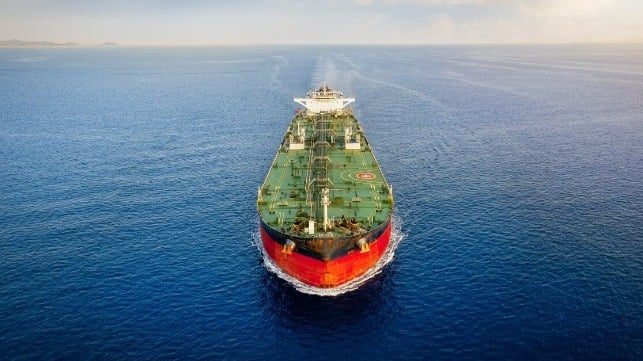
Three oil tankers caught fire on Saturday, November 14, 2026, after hitting naval mines in and around the Strait of Hormuz, according to Iran's navy. The claim, reported by Iranian state media, is the latest in a series of incidents in the world's most important oil waterway, where a war between the United States and Iran has been running since February. The reports have not been independently confirmed, and the ships involved have not been named. Here is what was reported, what is unclear, and why the strait matters.
What happened on November 14
Iran's navy and the navy of the Islamic Revolutionary Guard Corps (IRGC) said three oil tankers hit mines on Saturday, November 14. According to the statements carried by Iranian state media, one tanker hit a naval mine in the eastern Strait of Hormuz in the morning. Two more tankers hit mines later in the day, in the evening.
The IRGC Navy said the two evening tankers had switched off their radar and positioning systems and were trying to pass through a route Iran calls prohibited. Iran's IRNA news agency quoted the IRGC Navy as saying the two tankers "were attempting to slip through a prohibited route in the Strait of Hormuz when they hit naval mines, exploded, and burst into flames." A separate statement from Iran's regular navy said another tanker in a prohibited zone east of the strait, also with its tracking systems switched off, caught fire and stopped after hitting a mine.
The Iranian statements did not name the ships, their flags, their owners or their cargoes. They did not say whether any crew members were hurt, or how badly the ships were damaged. Reuters, which reported the Iranian claims, said it could not immediately verify them. The UK Maritime Trade Operations centre (UKMTO), which monitors shipping in the region, had not confirmed the incidents at the time of writing.
A pattern of incidents in the strait
The November 14 claims follow months of similar reports. Iran has said it requires vessels to get its permission to cross the strait since the war with the United States began in February, and it has attacked ships that it says do not follow its rules. On November 12, Reuters reported that Iran had claimed four tankers were involved in explosions after entering areas Tehran considered restricted. The United States has imposed a naval blockade on Iranian ports and says it is keeping the main shipping routes clear of mines.
The human cost of the shipping war is growing. The United Nations said at least 25 seafarers have been killed in and around the strait since the war began in February. UN official Khaled Khiari gave the figure during a Security Council briefing on Friday, November 13. The UN's International Maritime Organization tracked 136 security incidents involving vessels in the strait and the wider Middle East between March 1 and November 11, including 35 in October and 10 in November.
What else happened on November 14 and 15
The IRGC also said it had intercepted and destroyed a US MQ-1 Predator drone over Qeshm Island, in the strait. The United States did not immediately confirm that claim.
In Yemen, the Saudi-led coalition said it had shot down three Houthi drones in three hours, aimed at Saudi Arabia's capital and southern regions. Bahrain issued a potential danger alert for shipping. A senior US official told reporters that President Donald Trump and his Chinese and Russian counterparts will discuss the Iran war next week at the APEC summit in Shenzhen.
On the diplomatic front, former US Secretary of State Antony Blinken said on Saturday, November 14, that any settlement to the US-Iran war may require a concession over the Strait of Hormuz, floating a toll-like arrangement as one possibility. No US negotiating position was announced. The Associated Press reported that Qatar was still seeking an interim arrangement to restore shipping through the strait.
Iran also accused the United States of threatening to starve its people through the economic blockade, after US Secretary of State Marco Rubio said Washington's economic pressure was continuing to affect Iran and that military action was not necessary at this stage.
Why the Strait of Hormuz matters
The Strait of Hormuz is a narrow passage of water between Iran on one side and Oman and the United Arab Emirates on the other. At its narrowest point it is about 33 kilometres wide. Almost all the oil and gas that leaves the Persian Gulf by sea must pass through it.
The US Energy Information Administration said oil flows through the strait averaged 20.9 million barrels per day in the first half of 2025, about one fifth of the world's oil supply. US Central Command said more than 1.7 billion barrels of crude oil had been shipped through the strait by Gulf partners under US protection since the conflict began.
When shipping through the strait is disrupted, oil prices can rise and insurance costs for tankers climb, which is why every incident there, confirmed or not, moves markets far beyond the Gulf.
The history behind the strait
The strait became a flashpoint during the Iran-Iraq war of the 1980s, in the phase known as the Tanker War, when both sides attacked oil tankers and the United States sent warships to escort them.
Iran has threatened to close the strait many times over the years, but it has never done so fully, because Iran itself needs the strait to export its own oil. The current conflict is different, because Iran has moved from threatening closure to actively restricting passage and attacking ships it says break its rules, while the United States enforces a naval blockade against Iranian ports.
The shipping war in the strait is one part of a larger conflict that began in February 2026, when the United States and Israel began military action against Iran, and has spread to Yemen, the Red Sea and the Gulf.
What is confirmed and what is not
It is important to separate what has been reported from what has been confirmed. What is confirmed is that Iran's navy and the IRGC Navy said three tankers hit mines on November 14. It is also confirmed that the United Nations has recorded 25 seafarers killed in the area since February, and that the International Maritime Organization has tracked 136 shipping incidents since March.
What is not confirmed is whether the three tankers were actually hit, which ships they were, or whether anyone was hurt. Reuters said it could not immediately verify the Iranian reports. No shipowner, flag state or independent monitor had confirmed the incidents at the time of writing. In a war where information is itself a weapon, claims from either side should be read with care until evidence appears.
Frequently asked questions
What happened in the Strait of Hormuz on November 14, 2026?
Iran's navy and the IRGC Navy said three oil tankers caught fire after hitting naval mines. One was reported hit in the morning in the eastern strait, and two more in the evening on a route Iran calls prohibited. The claims have not been independently confirmed.
Were the tankers named?
No. The Iranian statements did not name the ships, their flags, their owners or their cargoes. They also did not say whether any crew members were hurt.
How many seafarers have been killed around Hormuz since February?
The United Nations said at least 25 seafarers have been killed in and around the strait since the war began in February 2026, in a figure given by UN official Khaled Khiari on November 13.
Why is the Strait of Hormuz so important?
About one fifth of the world's oil supply passes through the strait, averaging 20.9 million barrels per day in the first half of 2025. It is the only sea route for oil and gas leaving the Persian Gulf, so any disruption can raise oil prices worldwide.
Is the Strait of Hormuz closed?
No. Ships are still passing through, and the United States says it is protecting commercial shipping and keeping the main routes open. Iran says vessels need its permission to cross, and it has attacked ships it says break its rules. The strait remains open but dangerous.