The Reconquista was the long campaign by Christian kingdoms in the Iberian Peninsula to take back the land ruled by Muslims. It began after the Muslim conquest of Spain in 711, and it ended in 1492, when the last Muslim kingdom, Granada, surrendered to Ferdinand and Isabella. The campaign lasted nearly 800 years, making it one of the longest conflicts in European history.
The word Reconquista is Spanish for "reconquest". It suggests the Christian kingdoms were taking back land that had once been theirs. Historians debate the word, because the campaign was not one continuous war, but a series of separate wars, truces and conquests spread over centuries, and Christian and Muslim rulers often fought alongside each other.
How it began: Covadonga
In 711, the Muslim commander Tariq ibn Ziyad crossed from North Africa into Spain and defeated the Visigothic king Roderick at the Battle of Guadalete. Within a few years, Muslim armies controlled most of the Iberian Peninsula, a land they called Al-Andalus. Only a small strip of mountains in the far north, Asturias, stayed outside Muslim rule.
The traditional starting point of the Reconquista is the Battle of Covadonga, dated to 722. There, a Visigothic nobleman named Pelayo led a small force that defeated a Muslim army in the mountains of Asturias. It was a small battle, and at the time it changed little, but it became a powerful symbol. Pelayo founded the Kingdom of Asturias, the first Christian kingdom of the Reconquista.
For the next two centuries, the Christian north grew slowly. Asturias became the Kingdom of Leon, and new kingdoms appeared: Castile, Navarre, Aragon and Barcelona. These kingdoms were small and poor and often fought each other, while Al-Andalus, under the Umayyads of Cordoba, was rich and far ahead in learning, trade and culture.
The turning point: Toledo and Las Navas
The balance began to shift in the 11th century, when the Caliphate of Cordoba broke apart into small rival states called taifas. The Christian kingdoms, now stronger and better organised, began to push south.
In 1085, King Alfonso VI of Castile captured Toledo, one of the great cities of Al-Andalus. It was a major turning point. Toledo was an old Visigothic capital and a centre of learning, and its capture showed that the Christian kingdoms could take and hold a great Muslim city. Alfonso allowed Muslims to stay and keep their mosques and property, a policy that was common in the early Reconquista, when Christian kings needed Muslim farmers, craftsmen and taxpayers.
The Muslim response came from North Africa. First the Almoravids, then the Almohads, crossed the strait to defend Al-Andalus, and for a time they pushed the Christians back. But in 1212, a combined Christian army won a decisive victory at the Battle of Las Navas de Tolosa, defeating the Almohad caliph Muhammad al-Nasir and breaking Almohad power in Spain.
After Las Navas, the Reconquista moved fast. In 1236, Ferdinand III of Castile took Cordoba, the old capital of the caliphate. In 1248, he took Seville, the largest city in the south. Within a generation, Muslim rule in Spain had shrunk to a single kingdom: Granada, in the far south, ruled by the Nasrid dynasty.
The long pause: Granada survives
Granada survived for another 250 years. The Nasrid kingdom was small but rich, protected by mountains, and it paid tribute to Castile in gold, while the Christian kingdoms were busy with their own wars. The Black Death also killed a third of the population of Europe in the 1300s.
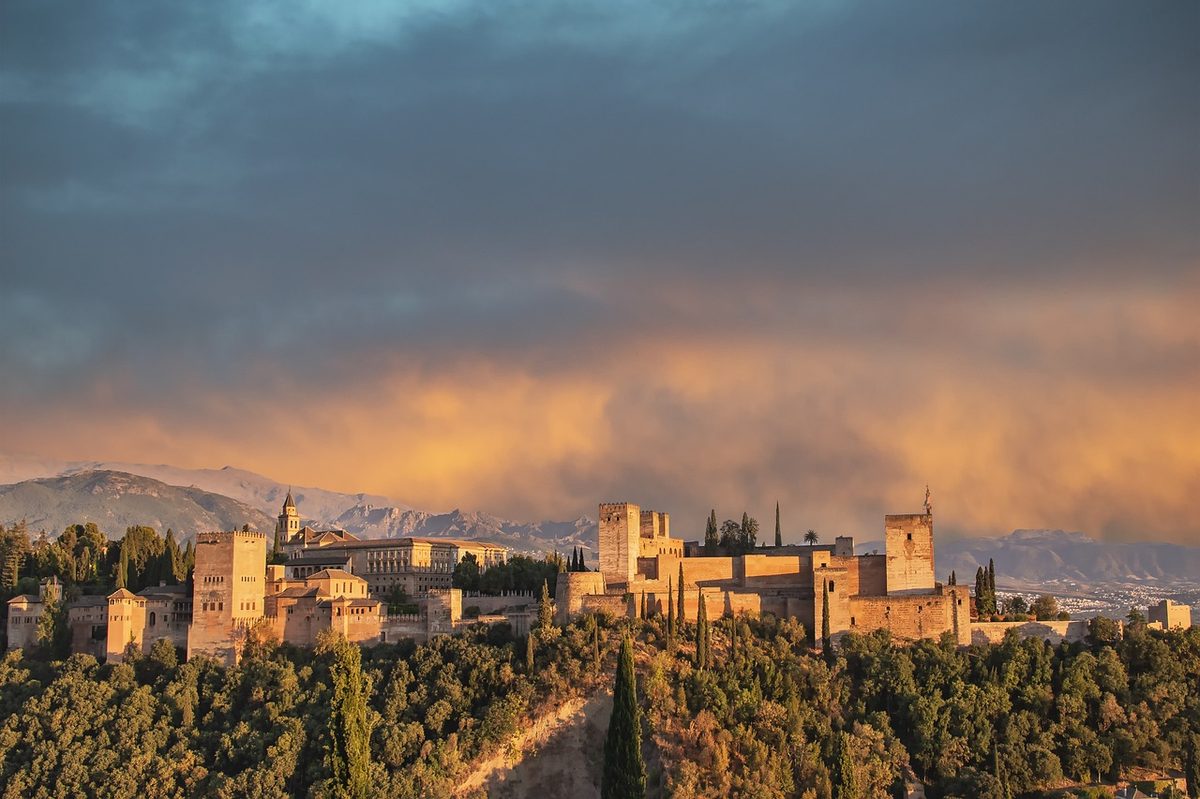
During this long pause, Granada flourished. Its rulers built the Alhambra, the palace-fortress that still stands above the city, and traded with North Africa and Italy. For the people who lived there, the Reconquista was a distant threat, held off by treaties, tribute and diplomacy.
But the Christian kingdoms were also changing. In 1469, Ferdinand of Aragon married Isabella of Castile, and ten years later they ruled a united Spain, determined to finish the Reconquista.
The fall of Granada: 1492
The final war began in 1482, when Ferdinand and Isabella attacked Granada. It lasted ten years, a slow war of sieges, with Castilian armies taking one fortress town after another. In 1491, they laid siege to Granada itself, and on 2 January 1492, the last Nasrid ruler, Muhammad XII, known to the Spanish as Boabdil, handed over the keys of the city.
The surrender terms were generous on paper. The Treaty of Granada promised Muslims the right to keep their religion, their mosques, their laws and their property. But the promises did not last. In 1502, Muslims in Castile were given the choice of baptism or exile. Those who converted, and their descendants, were called Moriscos, and they lived under suspicion for a century. In 1609, King Philip III ordered their expulsion, and around 300,000 people were forced to leave Spain, most of them for North Africa.
The year 1492 was also the year the Catholic monarchs expelled the Jews of Spain and the year Columbus sailed across the Atlantic. For Spain, it was a year of endings and beginnings: the end of Muslim rule and the start of a global empire.
Who fought in the Reconquista?
The Reconquista is often told as a simple story of Christians against Muslims, but the reality was more complicated. Christian kings often allied with Muslim rulers against other Christians, and Muslim rulers allied with Christians against other Muslims. The most famous example is El Cid, Rodrigo Diaz de Vivar, a Castilian knight of the 11th century. He served Christian kings, but he also served the Muslim ruler of Zaragoza, and in 1094 he took the city of Valencia and ruled it himself.
The armies were also mixed. Christian armies included Muslim soldiers, and Muslim armies included Christian mercenaries. Even in the middle of fighting, Christian and Muslim towns traded with each other, and scholars moved between courts.
What did the Reconquista leave behind?
The most visible legacy is architectural. The Great Mosque of Cordoba, the Mezquita, became a cathedral, but its forest of arches still stands. The Alhambra in Granada is one of the most visited monuments in Europe. The Giralda in Seville, once the minaret of a mosque, is now the bell tower of the cathedral. Across southern Spain, the style called Mudejar, built by Muslim craftsmen working for Christian patrons, mixed Islamic decoration with Christian buildings.
The Spanish language carries the legacy too. Hundreds of Spanish words come from Arabic: algebra, alcohol, coffee, sugar and orange, and place names such as Guadalajara and Guadalquivir. The word "ojala", meaning "hopefully", comes from the Arabic "inshallah", meaning "if God wills".
The Reconquista also shaped the idea of Spain itself. The Catholic monarchs used the victory over Granada to present Spain as a united, Catholic kingdom. That idea influenced Spanish policy for centuries, including the expulsion of the Moriscos and the conquest of the Americas, which began in the same year Granada fell.
Today, historians look at the Reconquista with a more careful eye. Some argue that the word itself is misleading, because it makes 800 years of complicated history sound like a single plan. Others point out that for most of those centuries, Christians and Muslims lived side by side, trading, building and sometimes fighting, but often at peace.
Frequently asked questions
How long did the Reconquista last?
The Reconquista lasted nearly 800 years, from the Muslim conquest of Spain in 711 to the fall of Granada in 1492. But it was not one continuous war. It was a series of separate campaigns, separated by long truces, and for most of that time Al-Andalus was the stronger power.
What was the Battle of Covadonga?
The Battle of Covadonga, traditionally dated to 722, was a small victory by the Visigothic nobleman Pelayo over a Muslim force in the mountains of Asturias. It became the symbolic start of the Reconquista, and Pelayo founded the Kingdom of Asturias, the first Christian kingdom of the campaign.
When did Granada fall?
Granada fell on 2 January 1492, when the last Nasrid ruler, Muhammad XII, known as Boabdil, surrendered the city to Ferdinand and Isabella. It was the last Muslim kingdom in Spain.
What happened to the Muslims of Spain after 1492?
The Treaty of Granada promised Muslims the right to keep their religion and property, but the promises were soon broken. Muslims were ordered to convert to Christianity or leave, and those who converted were called Moriscos. In 1609, King Philip III ordered the expulsion of the Moriscos, and around 300,000 people were forced to leave Spain.
Who was El Cid?
El Cid, whose real name was Rodrigo Diaz de Vivar, was a Castilian knight of the 11th century. He served Christian kings and Muslim rulers, took Valencia in 1094, and became a national hero of Spain. His life shows the Reconquista was not a simple war of Christians against Muslims.