Babur was the founder of the Mughal Empire, one of the greatest empires in the history of India. He was born in 1483 in Central Asia, a descendant of two of the most famous conquerors in history: Timur, also known as Tamerlane, on his father's side, and Genghis Khan on his mother's side. He became a king at the age of 11, lost his kingdom, won it back, lost it again, and finally built a new empire in India that lasted for more than 300 years. He is also remembered as a writer, because the memoirs he wrote, the Baburnama, are one of the finest books of their kind ever written.
A boy king in Fergana
Babur's full name was Zahir-ud-din Muhammad Babur. He was born on 14 February 1483 in Andijan, a town in the Fergana valley, in what is now Uzbekistan. His father, Umar Sheikh Mirza, was the ruler of Fergana, a small kingdom in the mountains of Central Asia. When Babur was 11 years old, his father died in a strange accident, falling from the roof of his palace, and the boy became king.
The first years of his rule were hard. His uncles and cousins all wanted his throne, and they attacked him again and again. He lost Fergana, won it back, and lost it again. He was a brave and skilled soldier, but he was young, and he had little money and few men.
His great dream was to take Samarkand, the famous city of his ancestor Timur. Samarkand was the most beautiful city in Central Asia, with great mosques, gardens, and palaces. Babur took it twice, once when he was 14 and once when he was 17, and each time he lost it again within months. The Uzbeks, a rising power under their leader Muhammad Shaybani Khan, were too strong for him. In 1501, Babur was driven out of Samarkand for the last time. He was 18 years old, and he had no kingdom left. He later wrote that he had to sleep in a poor man's house, with only a few followers.
Kabul
In 1504, Babur found a new home. He marched south across the Hindu Kush mountains and took Kabul, the city in the mountains of what is now Afghanistan. Kabul became his base for the next 22 years. From there, he raided into India again and again, and he built up his strength.
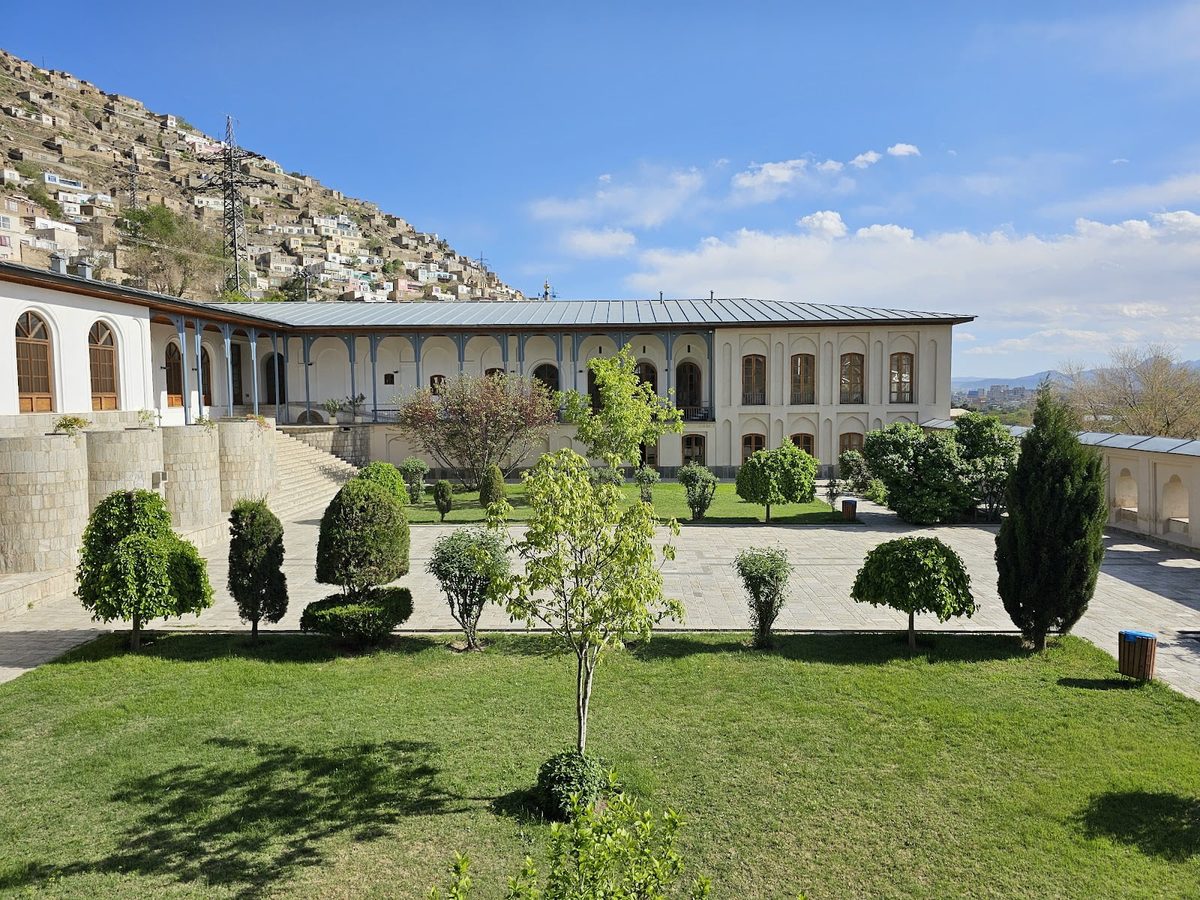
Life in Kabul was not easy. Babur was short of money, and his men often went unpaid. But Kabul gave him safety, and it gave him time to learn. He learned about gunpowder weapons from Ottoman Turks who had come to his court. He bought muskets and cannon, and he trained his men to use them. This would matter greatly when he faced the armies of India. He also built the Gardens of Babur on a hillside above the city, a garden of running water, fruit trees, and flowers that still exists today.
The conquest of India
In the early 1500s, northern India was ruled by the Delhi Sultanate, under Sultan Ibrahim Lodi. The sultanate was weak. Its nobles were divided, and many of them were unhappy with Ibrahim's rule. Some of them, including the governor of Punjab, invited Babur to come and take Delhi.
Babur crossed the Indus river in the winter of 1525 to 1526 with an army of about 12,000 men. It was a small army, but it was well trained, and it had guns and cannon. Ibrahim Lodi met him at Panipat, a town north of Delhi, on 21 April 1526. The sultan's army was much larger, with perhaps 100,000 men and hundreds of war elephants. But Babur had a plan.
He arranged his army in a new way. He placed his cannon and muskets in the centre, behind a wall of carts tied together with ropes. He placed his cavalry on the wings, with orders to ride around the enemy and attack from the sides, a tactic he had learned from the Turks called the tulughma. When Ibrahim's army attacked, it ran into the cannon fire from the carts. The elephants were frightened by the noise of the guns and turned back into their own men. Then Babur's cavalry swept around both flanks and closed the trap. The battle lasted a morning. Ibrahim Lodi was killed on the field, and his army was destroyed. Babur marched into Delhi and then to Agra, and the Mughal Empire was born.
The Battle of Khanwa
Babur's victory at Panipat did not give him India at once. The Rajput king Rana Sanga of Mewar gathered a large alliance of Hindu and Muslim rulers and marched against him. The two armies met at Khanwa, near Agra, on 16 March 1527. It was a harder battle than Panipat, and for a time it looked as if Babur might lose. His men were afraid, and some wanted to retreat. Babur gave a famous speech. He told his men that they were fighting for their faith and their honour, and he broke his wine cups in front of them, swearing that he would never drink wine again. His men rallied, and the battle was won. Rana Sanga was defeated, and Babur's rule over northern India was secure.
Over the next three years, Babur took more forts and cities in northern India. He built gardens at Agra, in the style of the gardens of Kabul. He wrote poetry, and he wrote his memoirs, describing everything he saw: the plants and animals of India, the people, the battles, and his own feelings. The Baburnama is honest in a way few royal memoirs are. Babur writes about his mistakes and his fears as freely as he writes about his victories.
Death and legacy
Babur died on 26 December 1530 in Agra, when he was 47 years old. He had ruled India for less than five years. His son Humayun succeeded him. At first, the new empire was fragile. Humayun lost it to an Afghan ruler, Sher Shah Suri, and had to win it back. But Babur's grandson, Akbar the Great, turned the Mughal Empire into one of the richest and most powerful states in the world. It lasted until 1857, more than 300 years after Babur's victory at Panipat.
Babur is buried in Kabul, in the Gardens of Babur, as he wished. His tomb is a simple stone, in the middle of the garden he built, under the open sky. It is a fitting place for a man who loved gardens and who wrote so honestly about his life. The Mughal Empire he founded went on to build the Taj Mahal, the Red Fort, and the great mosques of India. But it began with a boy king from Fergana who lost everything and started again.
Frequently asked questions
Who was Babur?
Babur was the founder of the Mughal Empire in India. He was born in 1483 in Fergana, in Central Asia, and he was a descendant of Timur on his father's side and Genghis Khan on his mother's side. He took Kabul in 1504 and conquered northern India in 1526.
How did Babur win the Battle of Panipat in 1526?
Babur won with a smaller army of about 12,000 men against Ibrahim Lodi's much larger force. He placed his cannon behind a wall of carts, used muskets to stop the enemy charge, and sent his cavalry around both flanks. The enemy elephants panicked at the gunfire, and the Delhi army was destroyed.
Where is Babur buried?
Babur is buried in the Gardens of Babur in Kabul, Afghanistan. He asked to be buried there, and his tomb stands in the garden he built on a hillside above the city.
What is the Baburnama?
The Baburnama is the memoir Babur wrote about his life. He wrote it in Chagatai Turkish, his native language. It covers his campaigns, his travels, the plants and animals he saw, and his own thoughts and feelings. It is one of the most honest and readable royal memoirs ever written.
Who succeeded Babur?
Babur's son Humayun succeeded him in 1530. Humayun lost the empire for a time but won it back, and his son Akbar the Great made the Mughal Empire into a great power that lasted for more than 300 years.