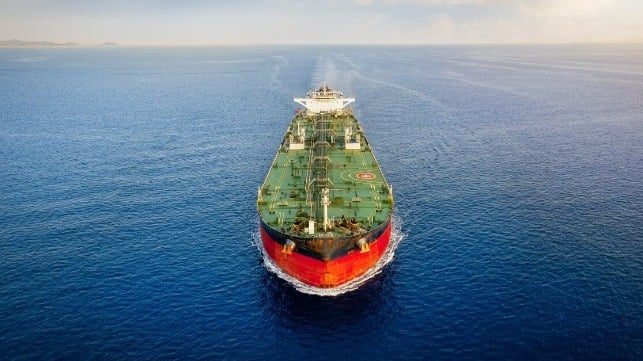
Iran is preparing to send a convoy of oil tankers through the United States naval blockade, according to reports from Gulf News, Reuters and Bloomberg. More than 14 tankers are said to be gathered near Kharg Island, Iran's main oil export terminal. If they sail, they could meet American warships in the Gulf.
The reports come on a day of rising tension. On Saturday, 21 November, two tankers were struck in the Strait of Hormuz, Iran said it shot down an American drone, and Bahrain said Iran had struck a civilian industrial site. A Qatari delegation held two hours of talks in Tehran on Friday.
What exactly is Iran planning?
The plan was first described in a column published on Wednesday by Fars News Agency, a news outlet close to Iran's Revolutionary Guards. It proposed sending a group of tankers through the blockade, and warned that any attack on the convoy would bring strikes on energy infrastructure in the region.
Since then, the idea has moved into the open. Iranian lawmaker Vahid Ahmadi, a member of parliament's National Security Committee, said 14 oil tankers were preparing to challenge the US blockade. He warned: "If we cannot sell oil, others should not be able to sell it either." He said military escorts were being considered, and that Qatar and Oman had been informed.
Satellite imagery and ship-tracking data appear to back up the reports. According to Bloomberg, Euronews and the tracking company TankerTrackers, more than 14 Iranian-flagged tankers are gathered near Kharg Island, most with their tracking transponders switched off.
But key details are unconfirmed. No Iranian official has said a convoy has been ordered to sail, and there has been no independent confirmation that the operation has begun.
Why would Iran risk breaking the blockade?
The answer is money. Oil is Iran's main source of foreign currency, and the blockade, which stops ships entering or leaving Iranian ports, is strangling its economy.
According to the firm Kpler, around 43 million barrels of Iranian oil remain stranded inside the blockade zone, while about 20 tankers sit near Kharg Island, most of them loaded but not moving. Kpler has warned that payments from Iran's remaining oil shipments could dry up by mid-December, which could cost Tehran 3 to 6 billion dollars a month.
Iran loaded about 2 million barrels of crude a day in March, according to Reuters, citing Kpler and Vortexa. By September, Kpler recorded no loadings at all, the first full month without any Iranian oil loadings since the 1979 revolution.
The pressure is now reaching ordinary Iranians. On Saturday, the authorities announced rolling electricity cuts from Sunday, citing fuel shortages and damage to energy infrastructure during the war, with outages of up to two hours a day in some areas, according to AFP.
For Tehran, challenging the blockade is both an economic necessity and a gamble. If the tankers get through, Iran restarts its oil income. If the US stops them by force, Iran could face a military clash it may not want.
What is the US naval blockade?
The US naval blockade aims to prevent ships from entering or leaving Iranian ports, mainly to stop Iran from exporting oil. American warships patrol the waters near Iran and can intercept, inspect, divert or seize vessels that try to enter or leave Iranian ports without authorisation.
The blockade was first imposed on 13 April, lifted in June, and reinstated on 14 July after an understanding between Washington and Tehran collapsed. On 18 November, US Central Command tightened the rules further, warning that even ships receiving Iranian cargo through transfers at sea could face interception or seizure.
Two tankers struck on Saturday
On Saturday, the British maritime agency UKMTO said two tankers were hit in the Strait of Hormuz. One tanker, travelling out of the strait, was hit on the stern by an unknown projectile. Another tanker was struck in its engine room. No casualties were reported.
Iran's army said separately that a ship caught fire after hitting a naval mine in a restricted zone east of the strait, after ignoring warnings and switching off its identification systems. That claim could not be independently verified or linked to either of the UKMTO reports.
Iran also said it had shot down a US drone over Qeshm Island on Saturday, according to state television. American jets had struck an Iranian missile site on Qeshm the previous Tuesday, according to a US military official.
Bahrain also reported an attack on Saturday, saying Iran had struck a civilian industrial facility, causing a fire and damage but no casualties. Iran's Fars news agency reported that the Revolutionary Guards had attacked two US bases in Bahrain, Sheikh Isa and Juffair. Bahrain has suffered several attacks this week, ending a weeks-long lull in the conflict.
What happens if the tankers sail?
If the tankers approach the blockade, Washington will face three choices: let them through, turn them back, or take stronger action. Letting them through could undermine the blockade, while stopping them could trigger a standoff, especially if Iranian naval vessels provide escorts.
Iran has warned that attacks on its tankers could trigger retaliation against oil infrastructure elsewhere in the region, but an interception would not automatically mean war. Much would depend on whether both sides chose to escalate or to step back.
Diplomacy is still running alongside the threats. Deputy Foreign Minister Kazem Gharibabadi said on Saturday that Iran would take "any action necessary" to break the blockade, which Tehran calls an act of war, but he also confirmed that a Qatari delegation held two hours of talks in Tehran on Friday. Foreign Minister Abbas Araghchi has said Iran will keep exporting oil and pursuing diplomacy. Iran's conditions for talks include ending the war, unfreezing its assets, lifting oil sanctions and ending the blockade.
Why the Strait of Hormuz matters: a short history
The Strait of Hormuz is a narrow waterway between Iran and Oman, about 33 kilometres wide at its narrowest point. Before the war, it carried about one-fifth of the world's oil, from Saudi Arabia, Iraq, Kuwait, the United Arab Emirates and Qatar.
The strait has been a flashpoint before. In the 1980s, during the Iran-Iraq war, both sides attacked oil tankers in what became known as the Tanker War. In 2019, several tankers were attacked near the strait, and Iran seized a British-flagged tanker.
That history is why the convoy matters. The strait is the pressure point of the whole conflict, where Iran's economy, America's blockade and the world's oil supply meet. If the convoy passes, the blockade weakens. If it is stopped by force, the war could widen.
Frequently asked questions
What is Iran's tanker convoy?
Iran is reported to be preparing more than 14 oil tankers at Kharg Island, its main oil export terminal, to sail through the US naval blockade. Satellite imagery and ship-tracking data cited by Bloomberg, Euronews and TankerTrackers appear to show the tankers gathered near Kharg, but there has been no independent confirmation that the convoy has sailed.
What is the US naval blockade of Iran?
It is an operation by American warships to stop ships entering or leaving Iranian ports, mainly to prevent Iran from exporting oil. It was first imposed on 13 April 2026, lifted in June, and reinstated on 14 July.
Why is the Strait of Hormuz so important?
It is the narrow waterway between Iran and Oman through which tankers carry oil from the Gulf to the rest of the world. Before the war, it carried about one-fifth of the world's oil.
What happened to the two tankers on Saturday?
On Saturday, 21 November, the British maritime agency UKMTO said two tankers were hit in the Strait of Hormuz, one on the stern and one in the engine room. No casualties were reported. Iran's army said separately that a ship caught fire after hitting a naval mine, but that could not be verified.
Are the US and Iran still talking?
Yes, through intermediaries. A Qatari delegation held two hours of talks in Tehran on Friday. But formal US-Iran negotiations have not resumed, and Iran's conditions include ending the war, unfreezing its assets, lifting oil sanctions and ending the blockade.