Ibn Rushd was a philosopher, judge and doctor from Cordoba in Muslim Spain, and he is one of the most important thinkers in the history of both Islam and Europe. He was born in 1126 and died in 1198. In the Islamic world he is known as Ibn Rushd, and in the West he is known by the Latin form of his name, Averroes. His books on the Greek philosopher Aristotle were so careful and so complete that European scholars called him simply "The Commentator", and for hundreds of years no one in Europe studied Aristotle without reading him first.
A judge from a family of judges
Ibn Rushd was born in Cordoba, the capital of Muslim Spain, into a family of well-known judges. His grandfather was the chief judge of Cordoba, and his father held the same post. The young Ibn Rushd studied Islamic law, and he also studied medicine, astronomy, mathematics and philosophy, the full range of learning of his time.
His full name was Abu al-Walid Muhammad ibn Ahmad ibn Rushd. He grew up in Cordoba, still one of the great centres of learning in the world, with libraries, schools and scholars. Its rulers, the Almohads, a dynasty from North Africa that ruled Spain and Morocco, valued learning and kept scholars close to the court.
Ibn Rushd became a judge himself, serving as chief judge of Cordoba and later of Seville, and he was also a court doctor. The Almohad ruler Abu Yaqub Yusuf invited him to the court in Marrakesh, and his son and successor, al-Mansur, kept him in the same trusted position. For much of his life, he was both a senior judge and a royal adviser.
The commentaries on Aristotle
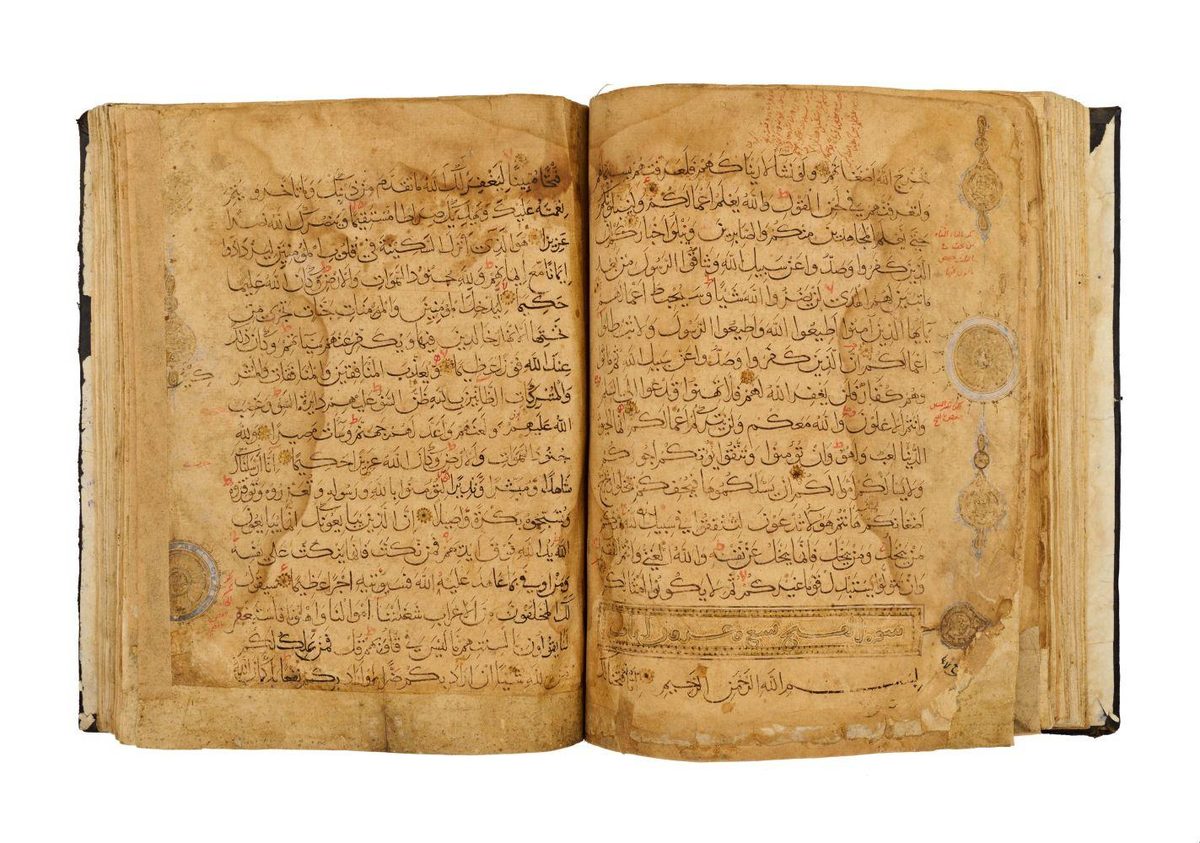
Ibn Rushd's most famous work is his set of commentaries on Aristotle. Aristotle was a Greek philosopher who lived about 1,500 years before Ibn Rushd, and his books covered logic, the natural world, the soul and the heavens. Muslim scholars had been studying Aristotle for centuries, and his ideas were at the centre of the great debates of Islamic philosophy.
Ibn Rushd wrote three kinds of commentary on each of Aristotle's books: short, middle and long. The long commentaries quoted Aristotle's words line by line and explained them in detail. No earlier scholar had done this work so fully, and the result was a complete guide to Aristotle's thought.
His aim was to defend philosophy. A century before him, the great scholar al-Ghazali had attacked the philosophers in his book "The Incoherence of the Philosophers", arguing that some of their ideas went against the faith. Ibn Rushd answered with a book of his own, "The Incoherence of the Incoherence", in which he argued that al-Ghazali had misunderstood both philosophy and religion. Reason and revelation, he said, could not truly disagree, because truth is one.
In another book, "The Decisive Treatise", he argued that the study of philosophy was not only allowed for Muslims but required of those who had the ability. The Quran, he wrote, calls on people to reflect on the world, and philosophy is the tool for that reflection. He drew a clear line: the Quran speaks in simple terms for ordinary people, and scholars may use reason to understand its deeper meaning.
Doctor and man of law
Philosophy was only one part of Ibn Rushd's work. As a doctor, he wrote a large medical book called "al-Kulliyat fi al-Tibb", or "Generalities on Medicine". It covered the whole of medicine as it was known at the time, from the parts of the body to diseases and their treatment. The book was translated into Latin under the title "Colliget", and it was used as a textbook in European universities for centuries.
As a jurist, he wrote "Bidayat al-Mujtahid", a famous book on Islamic law that compared the legal views of the different schools of law and explained the reasons behind their differences. It is still studied by students of Islamic law today.
He also wrote on astronomy, where he criticised the astronomy of Ptolemy, the Greek scholar whose model of the heavens was then accepted by everyone. Ibn Rushd argued that Ptolemy's system did not fit with the physics of Aristotle, and his criticism was one of the early steps on the long road to a new astronomy.
The fall from favour
In the last years of his life, Ibn Rushd lost the favour of the ruler al-Mansur. In 1195, his books were ordered to be burned in public, he was banished to the small town of Lucena, and he was forbidden to write. The reasons are not fully clear. Some historians say his enemies at court turned the ruler against him. Others say the ruler was under pressure from religious scholars who disliked philosophy. Whatever the reason, the disgrace did not last long. He was pardoned before his death, and he died in Marrakesh in 1198, at the age of 72.
His son, also a scholar, carried his body back to Cordoba, where he was buried. The story is often told that the books of Ibn Rushd were carried on one side of the mule that bore his coffin, and the books of his critics on the other, so that the two sides balanced each other.
Why Europe remembers him
Ibn Rushd's influence in the Islamic world faded after his death. His books were studied by a few scholars, but the tradition of philosophy he belonged to did not grow in the same way it had before him. In Europe, the opposite happened.
In the 1200s, his commentaries on Aristotle were translated into Latin, mainly in Toledo and in other centres where Christian, Muslim and Jewish scholars worked side by side. European universities were just being founded, and Aristotle's books were becoming the core of the university course. Because his commentaries were the fullest guide to Aristotle, every serious student had to read them.
The great Christian thinker Thomas Aquinas read Ibn Rushd closely. He agreed with him on some points, such as the power of reason, and disagreed with him on others. A group of thinkers at the University of Paris, known as the Latin Averroists, followed Ibn Rushd's ideas more closely, including his view that there is one shared intellect for all human beings. The Church condemned some of these ideas in 1270 and again in 1277, but the debate went on for centuries.
Through these debates, Ibn Rushd shaped the way Europe thought about the relationship between faith and reason. He is a central figure in the story of how Greek learning, preserved and developed by Muslim scholars, reached the Latin West and helped to build the European university tradition.
A bridge between two worlds
Today, Ibn Rushd stands as a symbol of the shared intellectual history of Islam and Europe. He was born in Cordoba, worked as a judge under Muslim rulers, wrote in Arabic and defended his faith with reason. Yet his greatest influence was felt in Paris, Oxford and the universities of Christian Europe, where his name was known to every scholar.
For Muslims living in Europe today, his life is a reminder that the connection between Islam and Europe is not new. It goes back almost a thousand years, to a time when a judge from Cordoba wrote the books that taught Europe how to read Aristotle.
Frequently asked questions
Who was Ibn Rushd?
Ibn Rushd, known in the West as Averroes, was a philosopher, judge and doctor from Cordoba in Muslim Spain. He lived from 1126 to 1198 and is best known for his detailed commentaries on Aristotle.
Why is Ibn Rushd called Averroes?
Averroes is the Latin form of his name, Ibn Rushd. European scholars in the Middle Ages read his books in Latin translation, and the Latin name became the standard one in the West.
What did Ibn Rushd write?
His most famous works are his commentaries on Aristotle, his reply to al-Ghazali called "The Incoherence of the Incoherence", his book on faith and reason called "The Decisive Treatise", a medical book called "al-Kulliyat fi al-Tibb" and a book on Islamic law called "Bidayat al-Mujtahid".
What did Ibn Rushd believe about faith and reason?
He believed that reason and revelation could not truly disagree, because truth is one. He argued that philosophy was allowed and even required for those able to follow it, and that the Quran speaks simply for ordinary people while scholars may use reason to understand its deeper meaning.
Why was Ibn Rushd important for Europe?
His commentaries on Aristotle were translated into Latin in the 1200s and became essential reading at European universities. Thinkers such as Thomas Aquinas and the Latin Averroists engaged with his ideas, and through them he shaped the medieval European debate about faith and reason.