The history of Muslims in Germany began long before the country had a large Muslim community. Muslim soldiers served in Prussian armies in the 1700s, a mosque was built for Muslim prisoners of war in 1915, and Turkish workers arrived in large numbers in the 1960s. Today, Germany is home to around 5.5 million Muslims, one of the largest Muslim populations in Western Europe. Germany does not record religion in its census, so the figure is an estimate, but it is widely accepted that Muslims now make up about 6 to 7 percent of the population.
This is the story of how that community grew, from a handful of soldiers and diplomats to guest workers, their families, and the German-born generations of today.
The first Muslims in German lands
Muslims first appeared in German history as soldiers. In the 1700s, the Prussian king Frederick the Great recruited Muslim cavalrymen, many of them Tatars and Bosnians, into his army. They served as light cavalry, and some settled in Prussian towns after their service ended. A small Muslim cemetery from this period still exists in Berlin, a quiet reminder of those early arrivals.
In the 1800s, contact grew through trade and diplomacy. The Ottoman Empire sent envoys to Berlin, and German officers and engineers worked in Istanbul. A few hundred Muslims lived in German cities by the late 1800s, mostly diplomats, students, merchants and servants. There was no settled community yet, and no mosque of their own.
The First World War changed that. Germany was allied with the Ottoman Empire, and thousands of Muslim soldiers from British and French colonies were captured on the Western Front and held in German prisoner-of-war camps. At Wunsdorf, south of Berlin, the German authorities built a wooden mosque in 1915 for the Muslim prisoners, in the hope of winning their support against Britain and France. It was the first mosque built in Germany. The mosque was later demolished, but the cemetery beside it, with the graves of Muslim soldiers, still exists today.
After the war, a small Muslim community formed in Berlin. In the 1920s, the city had a few hundred Muslims, including students, diplomats and converts. In 1925, the Ahmadiyya community began building the Wilmersdorf Mosque in Berlin, which opened in 1928. It is the oldest mosque still standing in Germany, and it survived the Second World War.
War, division and new arrivals
During the Second World War, Muslim soldiers again fought on German soil, this time as prisoners and as recruits in German units drawn from the Soviet Union and the Balkans. After the war, Germany was divided, and the Muslim presence remained tiny. In West Germany in the 1950s, the Muslim population was only a few thousand people.
That changed with the guest worker programme. West Germany's economy was growing fast after the war, and it needed workers for its factories, mines and building sites. In 1961, West Germany signed a labour recruitment agreement with Turkey, the first of several with Muslim-majority countries. Agreements with Morocco followed in 1963, Tunisia in 1965 and Yugoslavia in 1968. Workers from Yugoslavia included many Bosnian Muslims.
The first Turkish workers arrived expecting to stay for a few years, earn money and return home. They were mostly young men, and they lived in workers' hostels near the factories. They prayed in basements, back rooms and rented halls. By the late 1960s, there were hundreds of thousands of Turkish workers in West Germany, and the first Turkish mosques began to appear in industrial cities such as Duisburg, Cologne and Frankfurt.
In 1973, after the oil crisis, West Germany stopped recruiting foreign workers. The government expected many workers to go home. Instead, the opposite happened. Workers who had planned to return decided to stay, and the government allowed them to bring their wives and children. Family reunification turned a population of temporary workers into a settled community, just as it had in France. Children were born in Germany, went to German schools and grew up speaking German.
East Germany had its own, smaller story. It recruited workers from Vietnam and Mozambique, and a small number of Muslim students came from Arab countries and studied at East German universities. After reunification in 1990, many of these students stayed, adding a small Arab and African presence to the Muslim community in the east.
A settled community
By the 1980s, Muslims in Germany numbered over a million. The community built mosques, shops, cultural centres and associations. The largest organisation, DITIB, the Turkish-Islamic Union for Religious Affairs, was founded in 1984 and today runs hundreds of mosques across Germany. Other organisations followed, including the Central Council of Muslims in Germany, founded in 1994, which brings together Muslims of many backgrounds.
The community is diverse. Turks remain the largest group, with around 3 million people of Turkish origin in Germany, though not all of them are practising Muslims. There are also large communities from the Balkans, especially Bosnians and Albanians, from the Arab world, including Syrians, Lebanese and Iraqis, and from Afghanistan, Pakistan and Iran. The 2015 refugee crisis added hundreds of thousands of new arrivals, above all from Syria, Iraq and Afghanistan, and it changed the make-up of the community again.
German-born Muslims are now a large part of the story. The second and third generations speak German as their first language, attend German schools and universities, and work in every profession. Germany has Muslim members of parliament, mayors, judges, doctors, teachers and footballers. Mesut Ozil, the son of Turkish guest workers, became one of the most famous footballers in the world.
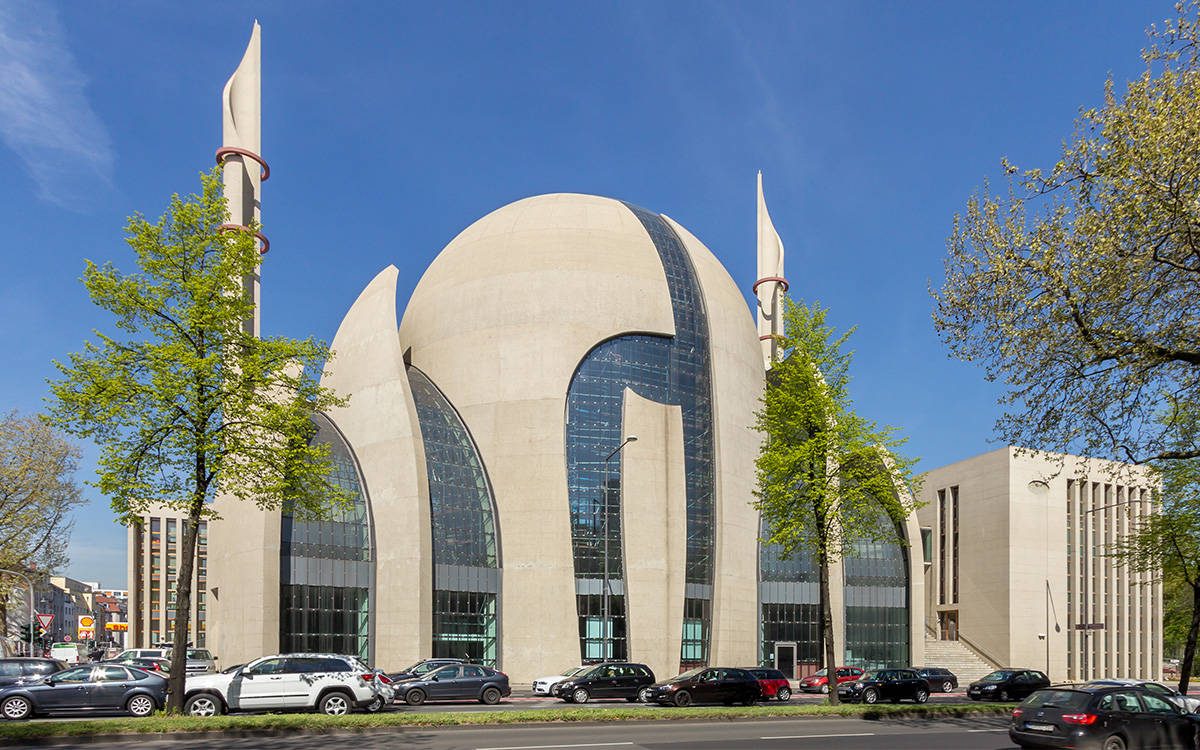
Mosques have also become part of the German landscape. The Cologne Central Mosque, opened in 2018, is one of the largest mosques in Europe, with room for more than a thousand worshippers. The Sehitlik Mosque in Berlin, opened in 2005, was built in Ottoman style. The Duisburg Merkez Mosque, opened in 2008, was built with the support of the city and the Catholic Church. These buildings show a community that has put down roots.
Debates and belonging
Like other European countries, Germany has debated the place of Islam in public life. In the early 2000s, several German states banned teachers from wearing the headscarf in state schools, and courts have argued over the rules ever since. In 2018, Germany began training its own imams in German, so that mosques would depend less on imams sent from Turkey. A German Islam Conference, started by the government in 2006, brings Muslim organisations and the state together to discuss practical questions such as Islamic religious education in schools, the training of imams and the building of mosques.
At the same time, Muslims in Germany face real problems. Studies have shown that people with Turkish or Arab names find it harder to get job interviews and flats. Attacks on mosques and anti-Muslim abuse are reported every year. The far right has grown in parts of Germany, and some politicians have questioned whether Islam belongs in Germany. Most German Muslims say they feel both German and Muslim, but many also say they are still treated as outsiders.
The story of Muslims in Germany is a story of arrival, settlement and belonging. It runs from Prussian cavalrymen in the 1700s to the guest workers of the 1960s and the German-born generations of today. It is still being written, and its next chapters will be written in German.
Frequently asked questions
When did Muslims first come to Germany?
Muslims first appeared in German history in the 1700s, when Muslim cavalrymen served in the Prussian army. A settled Muslim community only developed much later, from the 1960s onwards, when Turkish and other guest workers arrived.
How many Muslims live in Germany today?
Germany does not record religion in its census, so there is no official number. Estimates generally put the Muslim population at around 5.5 million people, or roughly 6 to 7 percent of the population, making Germany one of the largest Muslim populations in Western Europe.
What was the first mosque in Germany?
The first mosque built in Germany was a wooden mosque at the Wunsdorf prisoner-of-war camp in 1915, for Muslim soldiers captured in the First World War. The oldest mosque still standing is the Wilmersdorf Mosque in Berlin, opened in 1928.
Where do most German Muslims come from?
The largest group is of Turkish origin, followed by people from the Balkans, especially Bosnia and Albania, and from the Arab world, including Syria, Lebanon and Iraq. The 2015 refugee crisis added large numbers of Syrians, Iraqis and Afghans.
What is DITIB?
DITIB is the Turkish-Islamic Union for Religious Affairs, founded in 1984. It is the largest Muslim organisation in Germany and runs hundreds of mosques, mostly Turkish, across the country.