The history of Muslims in the Netherlands began with trade, not settlement. In the 1600s, Dutch merchants and diplomats travelled to the Ottoman Empire, and a small number of Muslim traders and envoys visited Dutch ports. For three centuries the Muslim presence stayed tiny, but after the Second World War it grew fast, first through migration from former colonies and then through guest workers from Turkey and Morocco. Today, about one million Muslims live in the Netherlands, roughly 5 percent of the population.
The Netherlands does not record religion in its census, so the figure is an estimate. Even so, the community has changed the country, building hundreds of mosques, opening Islamic schools and becoming part of Dutch public life.
The first contacts: trade with the Ottoman Empire
In the early 1600s, the Dutch Republic was a rising trading power, and the Ottoman Empire was one of its most important partners. In 1612, the Dutch sent Cornelius Haga as their first ambassador to Istanbul, and the two states signed a trade agreement. Dutch ships carried goods to Ottoman ports, and Ottoman merchants, diplomats and sailors sometimes visited Amsterdam and other Dutch cities.
These early Muslims were visitors, not settlers. A few stayed, and some Dutch people in this period converted to Islam after travelling or living in Ottoman lands, but there was no Muslim community and no mosque. For most Dutch people, Islam was something they knew about through trade, books and the stories of sailors.
The Dutch also ruled a large colony in Southeast Asia, the Dutch East Indies, now Indonesia, which had the largest Muslim population in the world. Dutch officials, soldiers and merchants lived there for centuries, and some brought Indonesian servants and sailors back to the Netherlands. But the number of Muslims who settled in the Netherlands itself stayed very small until the 20th century.
After the war: migration from Indonesia and Suriname
The Second World War changed the Netherlands, and decolonisation changed it again. After Indonesia became independent in 1949, about 12,500 Moluccans arrived in the Netherlands in 1951. They were soldiers who had served in the Dutch colonial army and their families, and their arrival marked the start of large-scale migration from the former colonies.
A bigger wave came from Suriname, a Dutch colony in South America. When Suriname became independent in 1975, tens of thousands of Surinamese moved to the Netherlands. Many were Muslim, including Javanese and Hindustani Surinamese, and they settled mainly in Amsterdam, Rotterdam and The Hague.
At the same time, small numbers of students and workers arrived from Egypt, Iraq, Iran and other countries. The community was still small, but it was growing, and it needed places to pray.
The first mosque in the Netherlands was the Mobarak Mosque in The Hague, built in 1955 by the Ahmadiyya community. It was a modest building, but it was a landmark: the first purpose-built mosque in the country. For years it was one of the only mosques in the Netherlands.
The guest workers: Turks and Moroccans
The biggest change came in the 1960s. The Dutch economy was growing fast after the war, and factories, mines and building sites needed workers. The government signed labour recruitment agreements with Turkey in 1964 and with Morocco in 1969, and thousands of young men travelled to the Netherlands for work.
The first Turkish and Moroccan workers expected to stay for a few years, earn money and return home. They lived in workers' hostels and prayed in basements, rented halls and back rooms. But the stay became permanent. In 1973, after the oil crisis, the Netherlands stopped recruiting foreign workers. Instead of going home, many workers decided to stay, and the government allowed them to bring their wives and children.
Family reunification turned temporary workers into a settled community. Children were born in the Netherlands, went to Dutch schools and grew up speaking Dutch. By the 1980s, Turks and Moroccans were the two largest Muslim groups in the country, and they still are today, each numbering more than 400,000 people.
As families settled, mosques appeared in every large city, built by Turkish and Moroccan communities, often in converted buildings. By the 1990s, the Netherlands had hundreds of mosques, and Islam had become a permanent part of the Dutch landscape.
A community takes shape
The 1980s and 1990s brought new arrivals, with refugees from Somalia, Afghanistan, Iraq, Iran, Bosnia and later Syria. Each group added its own mosques, shops and organisations, and the Muslim population became one of the most diverse in Europe.
Muslims also became more visible in Dutch public life. Ahmed Aboutaleb, who was born in Morocco, became mayor of Rotterdam in 2009, the first mayor of immigrant background in a major Dutch city. In 2015 the party DENK was founded, winning seats in parliament in 2017. Today there are dozens of Islamic primary schools, Muslim broadcasters, youth organisations and charities across the country.
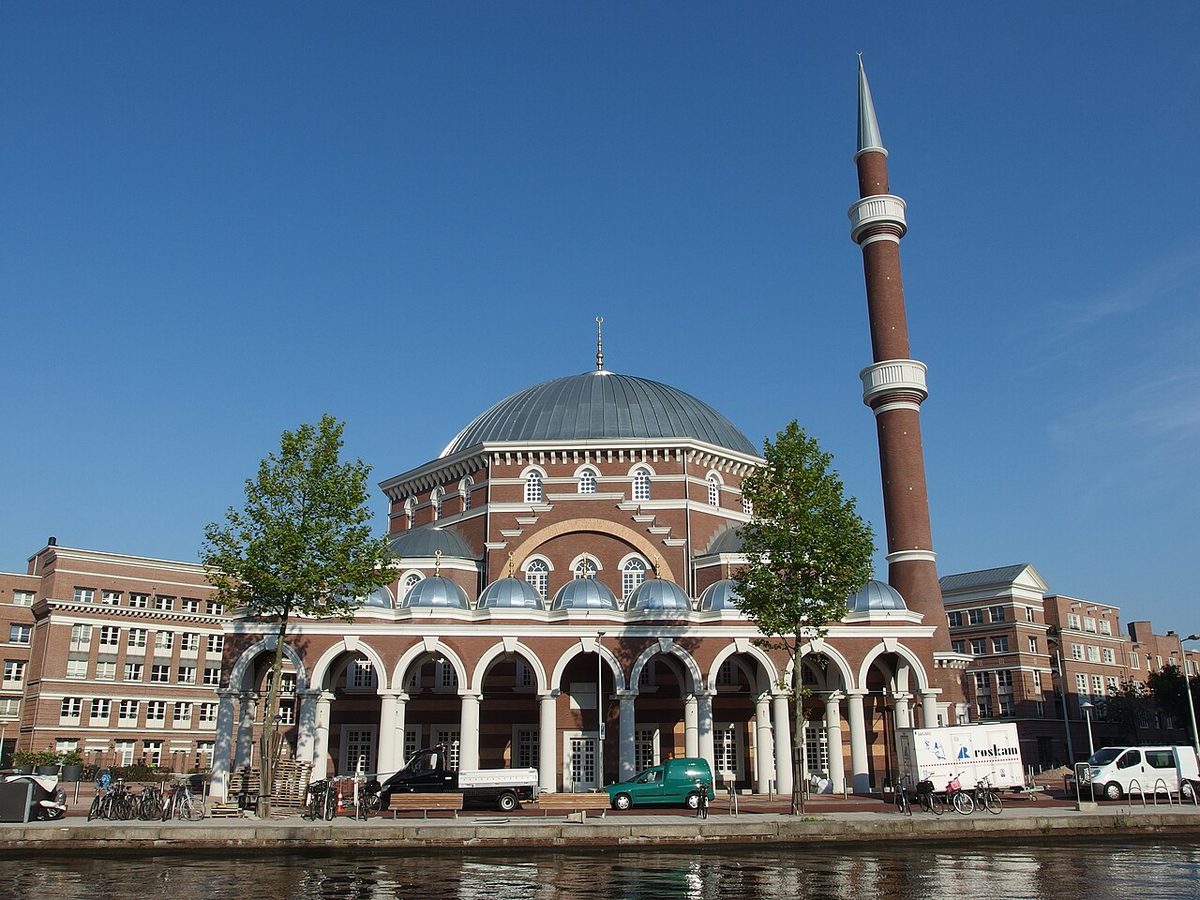
The largest mosque in the Netherlands is the West Mosque in Amsterdam, also known as Ayasofya Camii. It opened in 2016, and its tall minaret and silver dome have become a landmark on the city skyline, a symbol of how far the community has come from praying in basements in the 1960s.
Tensions and debate
The growth of the Muslim community has also brought debate. In the early 2000s, the Netherlands went through a difficult period. The politician Pim Fortuyn, who was critical of Islam, was murdered in 2002. In 2004, the film-maker Theo van Gogh was murdered in Amsterdam by Mohammed Bouyeri, a Dutch-Moroccan man who said he acted because of Van Gogh's criticism of Islam. The murder shocked the country and led to a sharp debate about free speech, religion and integration.
Since then, Dutch politics has often debated Islam and integration, and some parties have called for limits on immigration and mosque building. At the same time, most Dutch Muslims describe themselves as both Dutch and Muslim, and younger generations born in the Netherlands feel strongly Dutch.
The debate continues, but daily life tells a quieter story. Turkish bakeries, Moroccan butchers and Surinamese restaurants are part of Dutch high streets. Muslim students, doctors, teachers and business owners work across the country. The community that began with a handful of traders in the 1600s is now woven into Dutch society.
Muslims in the Netherlands today
Today, Muslims in the Netherlands number about one million people, roughly 5 percent of the population. The largest groups are of Turkish and Moroccan background, followed by Surinamese, Somali, Afghan, Syrian, Iraqi and Iranian Dutch. Most live in the big cities: Amsterdam, Rotterdam, The Hague and Utrecht.
There are hundreds of mosques, dozens of Islamic schools, and a growing number of Muslim organisations, from student societies to professional networks. The community is young: a large share of Dutch Muslims are under 40, and many are second or third generation, born in the Netherlands.
The story of Muslims in the Netherlands is one of slow beginnings and fast change. It started with diplomats and traders in the 1600s, grew through colonial migration and guest workers, and is now a settled, diverse community. Its mosques, from the small Mobarak Mosque of 1955 to the great West Mosque of Amsterdam, mark each step of that journey.
Frequently asked questions
When did Muslims first come to the Netherlands?
The first Muslims to visit the Netherlands were traders, diplomats and sailors from the Ottoman Empire in the 1600s, after the Dutch Republic opened trade with Istanbul in 1612. Large-scale Muslim settlement only began after the Second World War, with migration from Indonesia and Suriname and guest workers from Turkey and Morocco in the 1960s.
How many Muslims live in the Netherlands?
About one million Muslims live in the Netherlands, roughly 5 percent of the population. The exact figure is an estimate, because the Netherlands does not record religion in its census. The largest groups are people of Turkish and Moroccan background.
What was the first mosque in the Netherlands?
The Mobarak Mosque in The Hague, built in 1955 by the Ahmadiyya community, was the first purpose-built mosque in the Netherlands. The largest mosque in the country today is the West Mosque in Amsterdam, which opened in 2016.
Why did so many Turks and Moroccans move to the Netherlands?
The Netherlands recruited workers from Turkey in 1964 and Morocco in 1969, because its growing economy needed labour for factories, mines and building sites. The workers first came alone, but after recruitment stopped in 1973, many stayed and brought their families, turning a temporary workforce into a settled community.
Who are the main Muslim groups in the Netherlands today?
The two largest groups are Dutch Turks and Dutch Moroccans, each numbering more than 400,000 people. Other large groups include Surinamese Muslims and refugees and migrants from Somalia, Afghanistan, Iraq, Iran and Syria.